
Key Takeaways
What you'll learn in this article
- Plan recordings around irreversible changes and useful checkpoints, not an obligation to film every day.
- End each work session with a reference shot, a short progress note, and a clearly named folder of original clips.
- Choose between a complete recap and a standalone progress lesson based on the evidence you actually have.
- If the outcome is uncertain, promise the question you are investigating rather than a finished result you cannot guarantee.
Key Takeaways
- Plan recordings around irreversible changes and useful checkpoints, not an obligation to film every day.
- End each work session with a reference shot, a short progress note, and a clearly named folder of original clips.
- Choose between a complete recap and a standalone progress lesson based on the evidence you actually have.
- If the outcome is uncertain, promise the question you are investigating rather than a finished result you cannot guarantee.
To plan multi-day TikTok videos, define one viewer question, identify the project milestones that will answer it, and record a short handoff at the end of each work session. You do not need continuous footage or a daily update. You need enough trustworthy material to connect the starting problem, the important decisions, and the eventual outcome—even if the project takes longer than expected.
This workflow is for solo craft, DIY, and home-project creators whose work extends beyond one recording session. It addresses missing footage and unfinished-project uncertainty, not a special TikTok algorithm rule.
Define the question before promising the finish
A project is an activity. A post needs a useful point of view. “Building a cardboard house” describes what you are doing; “Can this folding method keep the roof edges aligned?” gives the audience something specific to understand.
Write three lines before starting:
- The viewer has this problem or question.
- This project could demonstrate this answer.
- I cannot know the final answer until this checkpoint.
The third line protects you from announcing a result prematurely. A piece may need assembly, drying, adjustment, or ordinary use before you can evaluate it. Follow the relevant material or manufacturer instructions; a content schedule should never shorten a required wait.
Separate what you can show now from what remains unknown. You might have a clear lesson about aligning two pieces without yet knowing whether the whole model will stand as intended. That lesson could support a standalone post, while the larger project remains unfinished.
Build a milestone capture list, not a daily filming obligation
Calendar days are useful for your schedule, but they are not automatically meaningful story beats. Three sessions of repeated assembly may add less information than one brief fit check.
List the moments you cannot easily reconstruct:
- The original condition before work changes it.
- A choice between two methods or arrangements.
- An action that hides a detail once completed.
- A test that determines whether you continue or revise.
- The final condition and its remaining limitations.
For each moment, write what the camera must prove. “Record assembly” is too vague. “Show the tab alignment before the roof panel covers it” tells you exactly when to stop and capture the detail.
Add a trigger to each recording task. For example: record before attaching the panel, after checking the fit, and before packing the work away. Triggers tied to the actual work are more useful than reminders that arrive while nothing has changed.
Do not record dangerous work merely because it is irreversible. Keep the camera out of the work area, follow safe procedures, and get appropriate help when needed. If filming interferes with safe handling, stop filming.
Leave a handoff for your next session
The hardest part of multi-day TikTok videos is often remembering what yesterday's footage established. A short handoff keeps tomorrow's recording from contradicting or skipping it.
Before clearing the workspace, capture a steady reference view and a closer view of the current checkpoint. Then leave yourself a note with these fields:
- Session date and current project stage.
- What changed during this session.
- Which clip shows the important action.
- What remains untested or unfinished.
- The next action that needs recording before it happens.
Keep the note factual. “Roof looks good” is less useful than “Two panels fitted; joint alignment visible in the close-up; final attachment not completed.” The latter distinguishes appearance from a completed test.
Store original clips in a project folder, with a separate folder or clear label for each session. Keep an independent backup of footage you cannot recreate. A filename such as “session-02-roof-fit” is easier to recover than a collection of nearly identical exports.
At the next session, read the note and watch the relevant final clip before moving anything. Record a brief establishing shot if the project, workspace, or lighting has changed. You are restoring the viewer's understanding, not trying to disguise the passage of time.
Keep a record of changes that affect the explanation
Continuity does not mean wearing the same shirt or pretending every session happened in one afternoon. It means preserving the information that lets someone understand the work.
If you replace a material, change a measurement, abandon a method, or get help off-camera, record that in the handoff. Those changes may explain the final outcome more than the attractive progress shots do.
Distinguish elapsed time from hands-on work. “Completed over several evenings” means something different from “took a few minutes.” Use accurate labels when waiting or repeated attempts matter to the viewer's expectations.
When you return to a comparison shot, use the earlier reference to match the relevant view. If conditions differ, say so where that affects interpretation. Do not use a brighter final setup as evidence that a material or surface changed more than it did.
These notes also make narration easier. Instead of reconstructing the story from memory, you can explain what happened in the order your records support.
Decide what to publish while the outcome is still unknown
You have three reasonable options. None requires inventing a result to keep your posting schedule.
Wait for a complete recap
Wait when the central promise depends on the final test. Save the opening footage and publish another useful topic while the project continues. Do not announce a firm reveal date unless you can realistically meet it.
Publish one complete intermediate lesson
Use an intermediate post when a checkpoint answers its own question. A demonstration of how you aligned a panel can stand alone even if the finished model is not ready.
State the boundary: this is the alignment method, not proof that the entire build succeeded. End with something the viewer can understand or apply now rather than withholding the essential step for a sequel.
Publish a documented setback
A failed attempt can be useful if you can show what failed and what remains uncertain. Describe the observation without claiming you have established its cause. “This joint opened during the fit check” is narrower than declaring that the material never works.
If a necessary moment was missed, acknowledge the gap. You can film a separate demonstration on spare material and label it as a reconstruction. Do not edit that later demonstration into apparent evidence of the original attempt.
A hypothetical paper-model plan
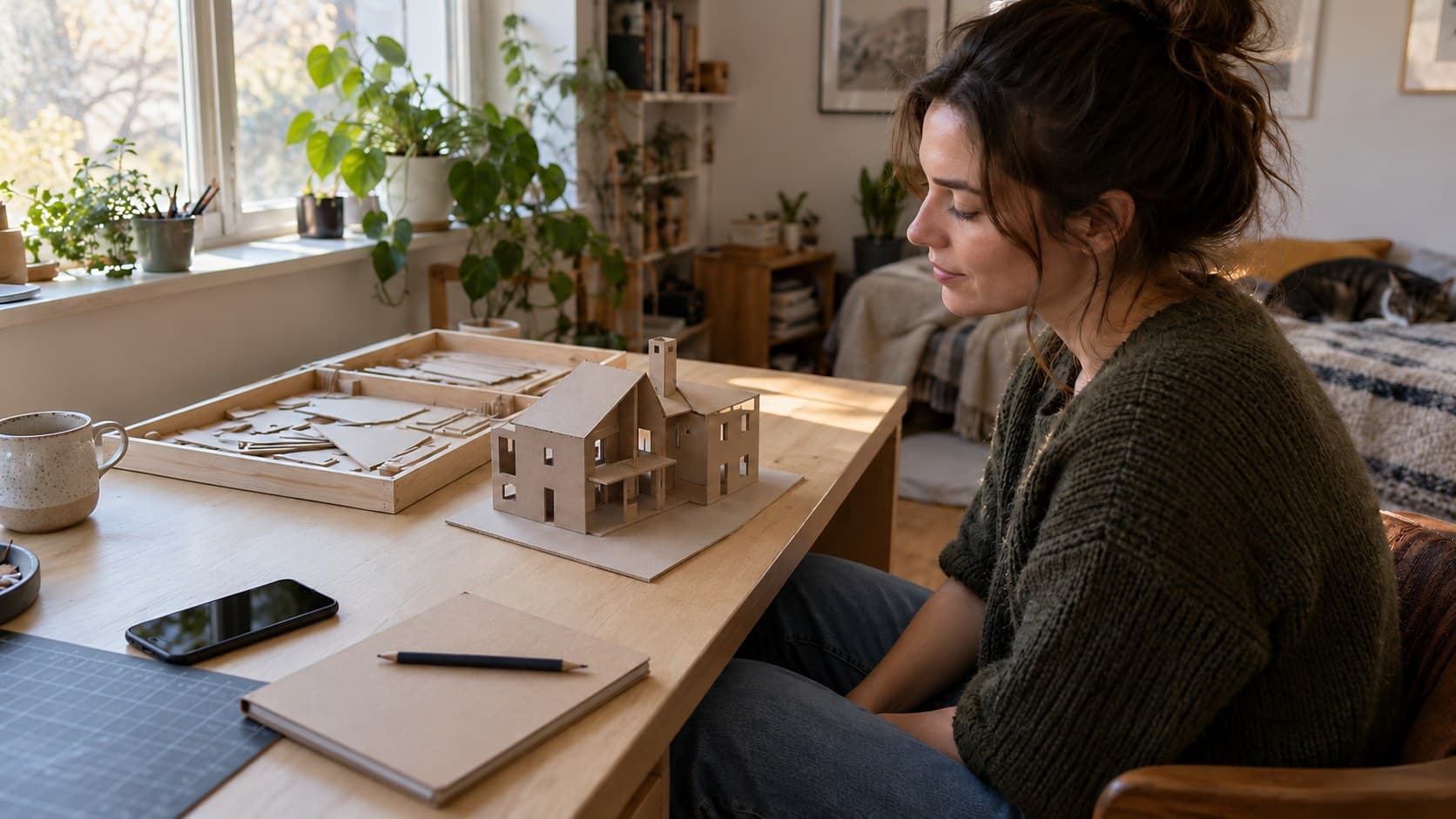
Imagine a craft creator building a cardboard house across several evenings. This is an illustrative workflow, not a customer story or reported result.
The question is whether a particular assembly order makes the roof easier to align. The creator records the loose parts and the intended join before assembly. After fitting the walls, they save a reference view and note that the roof has not yet been attached.
In the next session, the fit check reveals a mismatch. Rather than jumping straight to a finished beauty shot, they record the mismatch, document the adjustment, and keep the earlier footage. The eventual recap can explain the decision honestly.
If the project pauses, a separate post can show how they checked the fit before committing to attachment. It has a complete, modest payoff without pretending the larger question has already been resolved.
Package the post after you know what the footage supports
Write your final opening from the evidence, not from the optimistic title you imagined at the start. “The fit check that changed my assembly order” fits a documented adjustment. “The perfect way to build this” demands much more proof.
Use the free hook generator to explore wording, then reject lines that imply a result you did not establish. Choose one clear promise rather than summarizing every work session in the opening.
InsightTok AI can help turn the supported idea into a publishing plan through Next Post Studio: hook options, a niche-relevant rising sound, and personalized posting-time guidance. Use those suggestions after choosing the lesson. A sound should support the edit, not force you to omit the checkpoint that explains it.
Review the lesson, then choose the next question
TikTok's official Studio guidance describes account and video analytics, viewer activity times, and engagement insights that include comments and future-post inspiration. Use the fields available to your account; tools and availability can differ.
Compare similar posts after the same observation period, and read the questions alongside the numbers. Are people asking about the next legitimate step, or about an unexplained jump between sessions? Those call for different follow-ups. Neither a high view count nor fewer questions proves that viewers understood the project.
For future multi-day TikTok videos, save the capture list and handoff format that helped you finish the edit. Keep the method repeatable while allowing the actual result to change the story.
When you have a clear question and the footage to answer it, try InsightTok AI to plan the hook, sound, and posting window around that useful next post.
InsightTok AI Team
Expert in TikTok growth strategies and social media analytics. Helping creators reach millions with data-driven insights and AI-powered recommendations.
Ready to Grow Your TikTok?
Get AI-powered analytics and content recommendations to boost your views and engagement.
Start Free TrialRelated Posts
Why Your TikTok LIVE Sessions Generate 10K+ Viewers But Your Monthly Income Stays Flat: The LIVE-to-Evergreen Asset Monetization Framework
Have you ever wondered why your TikTok LIVE sessions attract thousands of viewers but your monthly income remains stagnant? Many creators face this challenge.
Why Your TikTok Reach Collapses After a 2-Week Hiatus But Never Fully Recovers: The Posting-Consistency Penalty Recovery Framework
Understand the harsh reality of the TikTok hiatus algorithm penalty and how to restore lost revenue with InsightTok AI's recovery framework.
Why Your TikTok Videos Get Watched Once and Never Again: The Rewatchability Framework to Design Deliberate Replays, Unlock the Replay Signal for Algorithm Boost, and Turn Rewatches Into $400-$1200+ Monthly Additional Revenue in 2026
Unravel the secret of designing rewatchable TikTok content and turn those replays into a significant revenue stream with our TikTok rewatchable content design monetization strategy.