
Key Takeaways
What you'll learn in this article
- Make paper grain visible with a matched overhang comparison instead of asking viewers to feel resistance through a screen.
- Use the same paper, equal overhang, and a visible quarter-turn so the comparison stays interpretable.
- Keep the grain mark, planned spine line, and final fold connected in the edit.
- Choose the next lesson from the orientation question viewers still cannot answer, not from views alone.
Key Takeaways
- Make paper grain visible with a matched overhang comparison instead of asking viewers to feel resistance through a screen.
- Use the same paper, equal overhang, and a visible quarter-turn so the comparison stays interpretable.
- Keep the grain mark, planned spine line, and final fold connected in the edit.
- Choose the next lesson from the orientation question viewers still cannot answer, not from views alone.
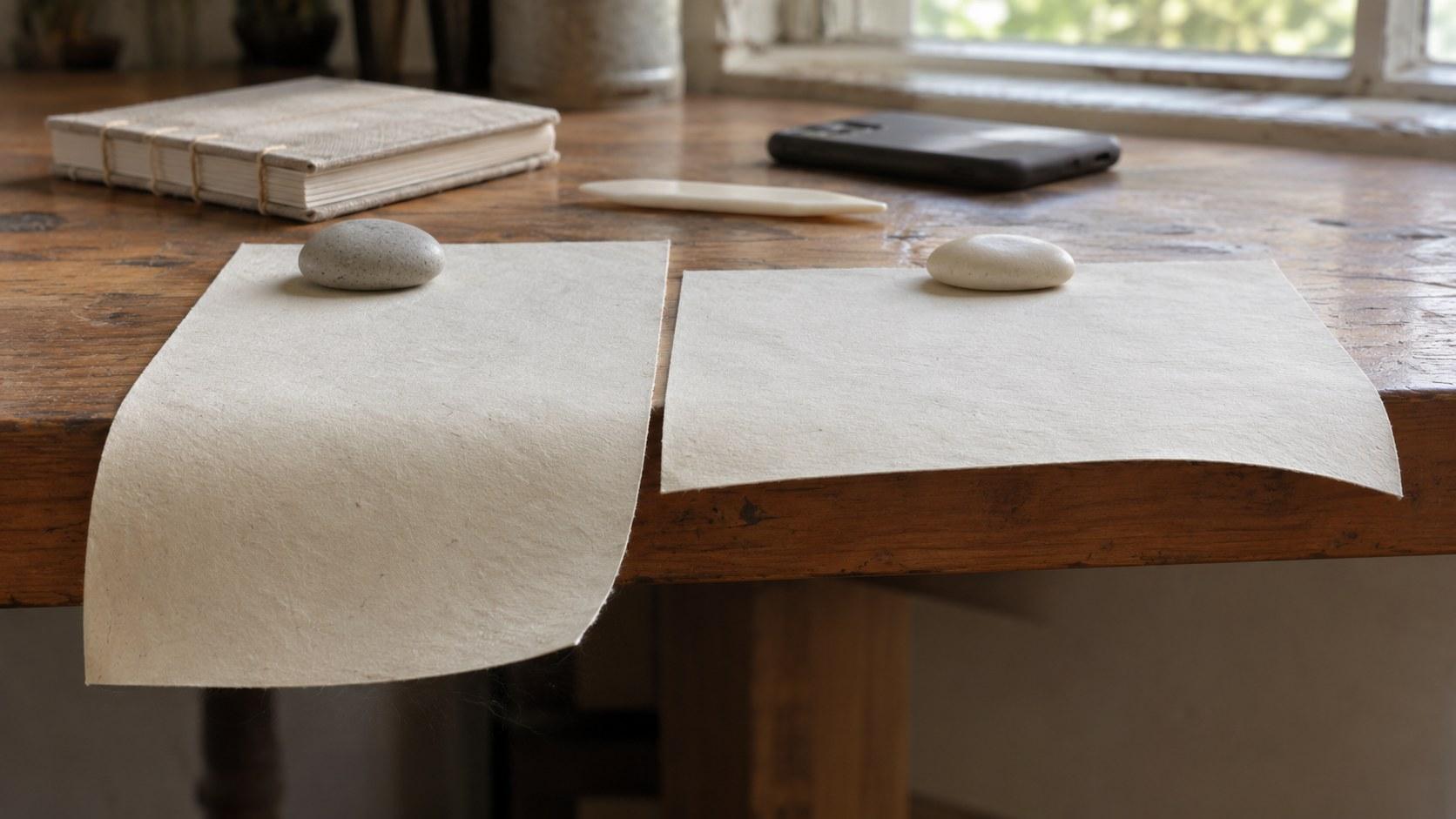
Useful bookbinding TikToks turn paper grain direction into a visible decision: compare how two sheets of the same paper bend over a table edge, identify the easier fold direction, then show how that line becomes the book's spine. Film the comparison from the side and preserve the paper's orientation through the fold. A viewer should leave knowing which line to fold along, not merely that paper has grain.
This is a filming plan for bookbinding educators whose explanations rely on “feel which way bends more easily.” That instruction can work in a workshop, but a phone screen cannot transmit resistance. Your next post needs a visual bridge between the material test and the finished fold.
Teach one decision before the whole binding
Set a narrow promise: “Find the spine-fold direction on this paper.” Leave sewing, cover construction, and adhesive choices for separate lessons.
The University of Brighton's grain-direction worksheet explains that machine-made paper fibers tend to align in one direction. It recommends orienting bookbinding materials with the grain parallel to the spine and describes both a gentle rolling test and an overhang test.
The important distinction for your video is between a movement and a line. Saying “bend this way” while moving your hands can leave viewers unsure whether you mean the direction the paper travels or the line of the eventual crease. Point to the intended fold line on the actual sheet.
Keep the claim modest. You are demonstrating one useful material check, not proving that every stiff or springy book has a grain problem. A finished binding contains other materials and construction decisions that this short comparison does not test.
Prepare a comparison the camera can explain
For the overhang demonstration, gather two sheets of the same paper, a clean table edge, suitable paperweights, a pencil, and your usual folding tool. Use sheets with matching dimensions and no existing creases. Keep decorative papers and mixed weights out of this first lesson.
Brighton's method places part of each sheet over a worktop edge, with the second sheet rotated a quarter-turn. The amount extending beyond the edge must match. The sheet that drops farther indicates the easier fold, with the grain line parallel to the worktop edge in that position.
Before recording:
- Establish that both sheets are the same stock and size.
- Rotate the second sheet visibly rather than substituting it off camera.
- Measure or align the projecting lengths so neither sheet has a longer unsupported section.
- Secure the tabletop portions without creasing the sheets or pressing on the overhang.
- Check that the difference is genuinely visible before writing your narration.
If the paper barely differs, say so and choose another clearly identified sample for the teaching demonstration. Do not push one sheet down to manufacture a result. A subtle or inconclusive test is a reason to qualify the explanation, not to add a more dramatic edit.
Film the drop from the side
An overhead view can establish the setup, but it hides the feature you want viewers to compare: how far the paper hangs down.
Place the phone on a stable support beside the worktop, far enough back to include both projecting sheets and the edge supporting them. Use a plain background that contrasts with the paper. Check that the front sheet does not completely obscure the second one.
Record a brief setup view, then a steady side view after releasing the sheets. Let both settle before describing the difference. Keep this evidence shot at normal speed and avoid a cut between release and comparison.
You can record narration afterward. Describe what the footage shows: “These extend the same distance. This one drops farther.” Avoid claiming a measured stiffness difference when you have only made a visual comparison.
Review the clip at ordinary phone size. If the paper edges disappear into a bright window or the tabletop hides the bend, change the lighting or camera position. More captions will not rescue an invisible comparison.
Carry the orientation through to the fold
The most useful part of bookbinding TikToks about grain often happens after the test. A creator identifies the direction correctly, lifts the sheet, rotates it during a cut, and accidentally loses the beginner.
Keep the chosen sheet in view. Mark a small pencil arrow parallel to the established grain direction, then indicate the planned spine-fold line running parallel to that arrow. Brighton specifically recommends a small arrow as a reminder after identifying grain.
Show the next actions in one continuous sequence:
- Lift the sheet without an unexplained rotation.
- Lay it flat with the arrow still visible.
- Point along the intended crease before bringing the edges together.
- Fold along that line and show its relationship to the arrow.
If you need to turn the sheet for comfortable handling, make the turn visible and name it. Avoid switching to a mirrored camera view midway through an orientation lesson.
Editions' explanation of paper grain also describes gently bending a sheet in two directions without creasing it to compare resistance. You can mention this as a tactile check, but do not replace the visible demonstration with “you can feel it” halfway through the lesson.
Show what the test does not establish
Finish with the folded sheet, not a sudden cut to an elaborate journal that appears to prove every benefit at once. The completed fold connects directly to the question you promised to answer.
If you include an opposing-direction fold, identify it as a separate comparison and use the same stock with comparable handling. Do not crush one sample harder or pre-crease it off camera. Describe the observed behavior rather than promising that every paper will produce an equally obvious difference.
Keep these boundaries explicit:
- You tested this paper, not every sheet sold in that size.
- The long edge alone is not a substitute for checking the grain.
- A neat fold does not establish the durability of a finished binding.
- A paper comparison does not automatically diagnose a warped cover.
These limits make the post more useful. They tell beginners which decision they can make now and which questions still need another demonstration.
A hypothetical five-shot lesson
Imagine a bookbinding creator whose viewers ask, “Which way does the arrow go?” This is an illustrative production brief, not a customer story or a reported performance result.
The creator could record:
- The promise: A folded sheet beside an unfolded one: “Find this spine line before you fold.”
- The setup: Matching sheets, a visible quarter-turn, and equal overhang.
- The evidence: A side view of the two sheets settling, with the difference described plainly.
- The connection: The selected sheet receives a grain arrow and a parallel spine-line indication.
- The result: An uninterrupted fold followed by a close view of the arrow beside the crease.
The lesson ends with a complete answer. A follow-up might explain how to preserve that marked orientation when cutting paper to size, but viewers should not need part two to understand today's fold.
For alternate opening lines, try the free hook generator. Reject wording such as “the secret to perfect books” when your footage only establishes a paper-folding decision.
Package the lesson around the evidence
Once the demonstration is clear, InsightTok AI can help package it through Next Post Studio: hook options, a niche-relevant rising sound, and personalized posting-time guidance. Use those inputs to plan a focused post, not to replace your knowledge of the material.
Choose sound after the instructional sequence is settled. If music competes with the explanation, leave it out or lower it. Do not shorten the orientation-to-fold sequence simply to land a transition on a beat. Use audio you have permission to use for the purpose of your post.
Select a posting window you can maintain and write down the question the video answers. This gives you a clearer basis for reviewing it later than “make another satisfying craft clip.”
Choose the next post from the remaining confusion
TikTok's current TikTok Studio guidance documents account and video analytics, viewer activity times, and engagement insights that include comments and future-post inspiration. Use the fields available in your interface; access and features can differ.
Compare this lesson with similar teaching posts after the same observation period. Look at available performance metrics, then read the actual questions separately:
- “Which line is the spine?” suggests the orientation connection still needs work.
- “What if both sheets bend similarly?” suggests a lesson about an inconclusive test.
- “How do I cut this into smaller pages?” suggests a paper-layout follow-up.
Comments are clues, not proof of learning. A quiet post may simply have fewer viewers. Ask a beginner to point to the planned fold line after watching; that checks the specific teaching goal more directly than a view count.
Before publishing more bookbinding TikToks, confirm that the same paper, equal overhang, grain mark, and final fold are all visible and connected. When that lesson is ready, try InsightTok AI to plan its hook, sound, and posting window.
InsightTok AI Team
Expert in TikTok growth strategies and social media analytics. Helping creators reach millions with data-driven insights and AI-powered recommendations.
Ready to Grow Your TikTok?
Get AI-powered analytics and content recommendations to boost your views and engagement.
Start Free TrialRelated Posts
Packing Orders TikTok Videos: A Customer-Safe Shot Plan
Film packing orders TikTok videos with a label-free setup, an honest five-shot sequence, and a clear plan for your next customer-focused post.

TikTok Creator Health Rating Penalty Recovery 2026: Protect Your Reach and Monetization
Learn how to distinguish a real TikTok account penalty from ordinary performance volatility. Follow a practical recovery and prevention plan designed to protect reach, eligibility, and creator revenue.

The TikTok Search-to-Subscription Funnel 2026: Turn Searchable Content Into Recurring Revenue
Learn how to convert TikTok search traffic into recurring subscription revenue. This guide covers content strategy, profile optimization, offer design, metrics, and a practical 30-day plan.