

Key Takeaways
What you'll learn in this article
- Why High Comment Engagement Often Produces No Revenue
- The Value Hidden Inside Your Comment Section
- The 2026 Comment Monetization Framework
- Step 1: Identify Commercial Intent
- Step 2: Answer for the Whole Audience
A video can attract hundreds of purchase questions, product requests, and enthusiastic replies without generating a single sale. A strong TikTok comment monetization strategy 2026 turns that attention into measurable actions—without making every response feel like a sales pitch.
Comments do not automatically create revenue, and the “40% more engagement” scenario is not a universal benchmark. It describes a common creator problem: conversation rises substantially while clicks, leads, and purchases remain flat because there is no system connecting audience intent to an offer.
Why High Comment Engagement Often Produces No Revenue
TikTok comments contain valuable signals, but engagement alone is not a business model. A viewer can ask where you bought a product, receive no useful answer, and forget about it five minutes later.
Creators commonly lose revenue because they:
- Respond too late, after purchase intent has faded
- Give helpful answers without directing viewers to a next step
- Pin entertaining comments instead of commercially useful ones
- Use vague calls to action such as “check my bio”
- Fail to distinguish buyers from casual participants
- Cannot attribute sales to specific videos or comment threads
- Treat comments as isolated reactions rather than content research
Imagine a skincare creator whose video receives 180 comments. Forty viewers ask whether the featured cleanser works for dry skin, but the creator only likes their comments.
The engagement looks excellent. However, viewers still do not know whether the product suits them, where to find it, or why they should trust the recommendation.
The Value Hidden Inside Your Comment Section
Not every comment has equal revenue potential. “Love this!” helps social proof, but “Does this fit a 15-inch laptop?” reveals a specific objection standing between a viewer and a purchase.
Comments generally fall into five commercial categories.
1. Purchase-intent comments
These viewers are close to taking action. They ask questions such as:
- “Where can I buy this?”
- “Is the link in your bio?”
- “Does it ship to Canada?”
- “Which size are you wearing?”
- “Is this worth the price?”
Respond quickly with a direct, accurate answer and an appropriate next step. If the product is available through TikTok Shop, direct viewers to the tagged product rather than making them search.
2. Objection comments
Objections expose the information missing from your video. Common concerns include price, durability, compatibility, difficulty, shipping, and expected results.
A strong reply does not dismiss the concern. It answers it with evidence:
“It is more expensive than the basic version, but I have used mine four times a week for eight months. I posted a durability update today so you can see the current condition.”
That response serves the original commenter while creating a reason for other viewers to visit your profile.
3. Recommendation requests
Comments such as “Which one would you choose for a beginner?” can support affiliate sales, consultations, digital products, or sponsored content.
Avoid listing ten options. Recommend one or two based on a clear use case, then disclose affiliate or brand relationships where applicable.
4. Expertise questions
Detailed questions show that viewers trust your knowledge. They can reveal demand for:
- Paid workshops
- Templates and guides
- Coaching or consulting
- Membership communities
- Email courses
- Brand-sponsored tutorials
If several viewers ask how you edit product videos, a downloadable shot list may have more revenue potential than another generic editing tip.
5. Community comments
Jokes, personal stories, and recurring references may not produce immediate sales. However, they strengthen audience identity and can support memberships, live events, merchandise, or subscriber-only content.
These comments matter, but they need a different path than purchase questions.
The 2026 Comment Monetization Framework
An effective system moves through five stages: Identify, Answer, Route, Repurpose, and Measure.
Step 1: Identify Commercial Intent
Start by reviewing comments from your 10 highest-performing videos over the previous 30 days. Label each meaningful comment using a simple spreadsheet or database.
Use categories such as:
- Purchase intent
- Objection
- Product question
- Expertise request
- Content request
- Testimonial
- Community conversation
- Customer support
- Spam or irrelevant
Then record:
- Video URL
- Date posted
- Comment wording
- Number of likes and replies
- Your response
- Recommended destination
- Result, if measurable
Profile analytics from InsightTok AI can help you identify videos with unusual engagement or growth patterns. Instead of manually reviewing every upload, begin with posts that produced strong comment activity relative to their views.
Calculate your intent rate
Use this simple formula:
Commercial intent rate = Revenue-relevant comments ÷ Total meaningful comments × 100
If a video has 120 meaningful comments and 30 express purchase intent or a solvable objection, its commercial intent rate is 25%.
This metric is often more useful than raw comment volume. A video with 40 precise buyer questions may be commercially stronger than one with 400 jokes.
Step 2: Answer for the Whole Audience
A comment reply is rarely read by only one person. Write it for every silent viewer with the same question.
An effective response should contain:
- A direct answer
- One useful detail or proof point
- A clear next step
For example:
“Yes, the planner includes an undated weekly layout, so you can start at any time. I show all 12 page types in the video pinned at the top of my profile, and the full version is linked in my bio.”
This is more useful than “Yes! Link in bio.”
Avoid urgency claims that are not true. False scarcity may create short-term clicks, but it damages trust and can create advertising or consumer-protection risks.
Step 3: Route Viewers to One Relevant Destination
The fastest way to lose an interested viewer is to offer five unrelated choices. Match each comment type to one logical destination.
| Comment intent | Best next step |
|---|---|
| Product availability | Tagged product or product page |
| Comparison question | Comparison video or buying guide |
| Beginner education | Free guide or email sequence |
| Personalized problem | Consultation or qualifying form |
| Repeated advanced question | Paid tutorial, template, or workshop |
| Community enthusiasm | Newsletter, membership, or live event |
| Brand interest | Media kit or business inquiry page |
Update your bio so the destination is easy to understand. “Resources I use” is clearer than “My links,” while “Book a 30-minute portfolio review” is clearer than “Work with me.”
You can also organize related TikTok posts into playlists where available. A viewer asking about camera equipment should reach a focused equipment series, not an unrelated collection of lifestyle videos.
Step 4: Repurpose High-Intent Comments Into Content
Some questions deserve more than a written response. TikTok’s video-reply format lets you turn proven audience interest into a new post.
Prioritize a video reply when:
- The question appears three or more times
- The answer requires a demonstration
- The objection affects purchase confidence
- The comment has accumulated likes or follow-up replies
- The answer can naturally feature your product or service
- Searchers are likely to ask the same question
Use the viewer’s wording in your spoken hook and on-screen text. If someone asks, “Will this microphone work in a noisy apartment?” begin with that exact problem before demonstrating the result.
End with a context-specific CTA:
- “The full settings checklist is in my free guide.”
- “I tagged the exact microphone used in this test.”
- “Comment ‘audit’ if you want a breakdown of the three packages.”
- “Join Friday’s workshop if you want to build this workflow with me.”
Do not ask viewers to comment a keyword unless you have a reliable way to deliver what you promised. Manually sending hundreds of messages is not a sustainable funnel.
Step 5: Measure Revenue, Not Just Replies
Comment monetization fails when creators cannot connect conversations to outcomes. Build lightweight attribution into every campaign.
Useful tracking methods include:
- UTM parameters for links associated with a campaign
- Unique discount codes for specific content series
- Separate landing pages for high-value offers
- TikTok Shop order data
- Affiliate dashboards
- Checkout surveys asking where buyers discovered you
- CRM tags for consultation leads
- Email sign-up source fields
TikTok purchases may be delayed. A viewer could discover you on Monday, read the comments on Wednesday, and buy after payday on Friday.
Measure performance over 7-day, 14-day, and 30-day windows where your tools and consent requirements allow. Do not declare a video unprofitable after 24 hours.
A Realistic Creator Example
Maya Chen is a fictional home-organization creator with 86,000 followers. Her pantry-labeling tutorial received 210,000 views and 1,340 comments, a 43% increase over her typical comment volume.
Initially, the video generated only 17 store visits and no measurable sales. Maya had replied to friendly reactions, but she overlooked 96 comments asking whether her label templates worked with free design software.
She changed her approach:
- She grouped the 96 questions as a software-compatibility objection.
- She posted a video reply demonstrating the template in the free software.
- She pinned a comment explaining what was included.
- She linked to a dedicated landing page with screenshots and FAQs.
- She added a unique tracking parameter to the page link.
- She emailed buyers seven days later to ask what influenced their decision.
Over the following 14 days, the landing page received 412 visits and generated 31 template sales at $18 each, producing $558 in revenue before fees and taxes. The example shows the mechanism, not a guaranteed result: Maya removed a repeated objection and created a trackable path to purchase.
Choose a Monetization Model That Fits the Comment
A complete TikTok comment monetization strategy 2026 should include multiple revenue paths. Forcing every question toward an affiliate product can weaken audience trust.
Affiliate and TikTok Shop revenue
Best for product questions, comparisons, demonstrations, and availability requests.
Always disclose commercial relationships clearly. Explain why the product is relevant rather than dropping a link without context.
Digital products
Templates, guides, presets, and mini-courses work well when viewers repeatedly ask for a process or resource.
Validate the idea before building it. Ten detailed requests can be more meaningful than a poll in which viewers casually say they might buy.
Services and consulting
Expertise questions can reveal high-value service leads. A résumé creator might turn “Can you review mine?” into a paid audit, while a fitness creator might offer personalized programming within their professional scope.
Sponsorships
Comments can strengthen brand pitches. Instead of showing only views, document recurring product questions, positive testimonials, and audience objections you helped resolve.
Use competitor analysis to understand how similar creators integrate sponsored products and where their audience response differs.
Email lists and owned communities
An email list gives creators a direct relationship with interested viewers. Offer a genuinely useful resource, obtain clear consent, and explain what subscribers will receive.
Owned channels also reduce dependence on changing algorithms. Explore additional TikTok growth strategies that connect discovery with long-term audience retention.
Mistakes That Can Damage Trust
Comment monetization should improve the viewer experience. Avoid these common errors:
- Selling under every comment: Match the response to the viewer’s intent.
- Hiding sponsorship disclosures: Make material relationships easy to notice.
- Using automated replies carelessly: Repetitive responses can look like spam.
- Deleting reasonable objections: Answer legitimate concerns transparently.
- Making unsupported claims: Use evidence for results, savings, or performance.
- Collecting data without consent: Follow applicable privacy requirements.
- Ignoring existing customers: Support questions deserve prompt attention.
- Promising unavailable products: Keep pinned comments and links current.
Creators should also audit older videos. Search-driven posts can continue attracting viewers long after prices, product availability, or recommendations change.
Your Weekly 30-Minute Comment Workflow
A sustainable system does not require monitoring TikTok all day.
Monday: Find opportunities
Review your strongest recent videos and identify repeated questions, objections, and requests. InsightTok AI can help surface content with notable engagement trends and recommend topics based on performance patterns.
Tuesday: Respond and route
Answer the highest-intent comments. Pin one response that gives new viewers essential context and a relevant next step.
Wednesday: Create one video reply
Choose the question with the strongest combination of repetition, specificity, and commercial relevance. Demonstrate the answer instead of merely repeating it.
Friday: Check downstream results
Review clicks, product views, sign-ups, inquiries, and sales. Compare outcomes with the comment themes that initiated the content.
Monthly: Update your system
Remove broken links, refresh outdated pinned comments, and revise FAQ content. Use best posting time analysis when scheduling video replies, but prioritize relevance and response speed over a supposedly perfect minute.
Metrics Worth Tracking
Do not optimize only for comments per view. Track metrics that show movement from attention to business value:
- Commercial intent rate
- Creator response time
- Video-reply views
- Profile visits after comment activity
- Link click-through rate
- Product-page views
- Email opt-in rate
- Qualified inquiries
- Conversion rate
- Revenue per high-intent video
- Assisted conversions
- Repeat customer rate
The goal is not to extract money from every conversation. It is to recognize when viewers are asking for help that your offer can genuinely provide.
Turn Conversation Into a Measurable Creator Asset
Your comment section is a live record of audience needs, objections, language, and buying intent. The best TikTok comment monetization strategy 2026 converts those signals into helpful replies, targeted content, relevant offers, and trackable customer journeys.
Start today by auditing your five most-commented videos. Identify one repeated buyer question, answer it with a video, route viewers to one useful destination, and measure results for at least seven days.
For a clearer view of which posts drive engagement and growth, use InsightTok AI analytics to spot patterns, compare performance, and prioritize the conversations most worth developing.
InsightTok AI Team
Expert in TikTok growth strategies and social media analytics. Helping creators reach millions with data-driven insights and AI-powered recommendations.
Ready to Grow Your TikTok?
Get AI-powered analytics and content recommendations to boost your views and engagement.
Start Free TrialRelated Posts
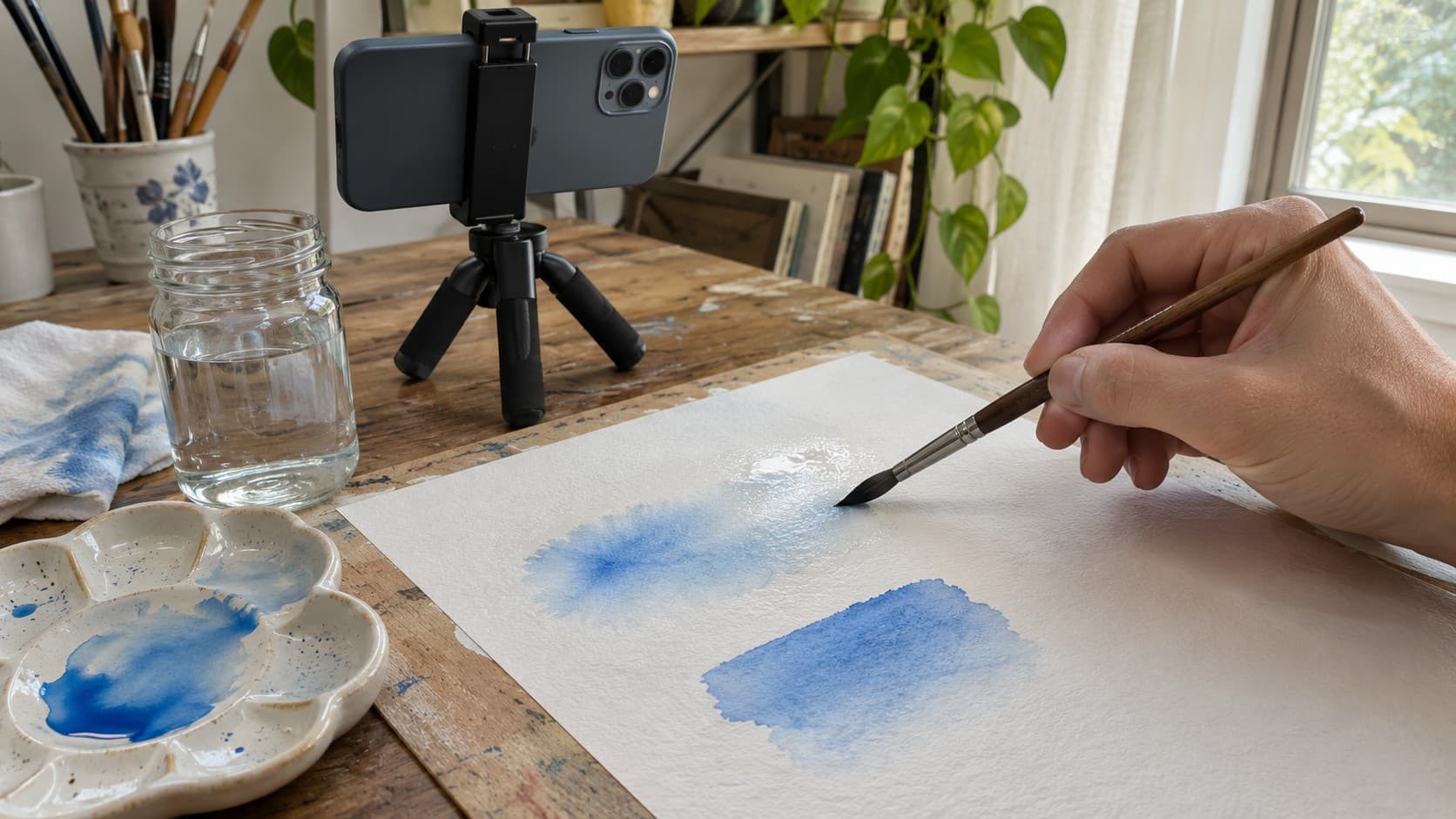
Watercolor TikTok Tutorials: Show Paper Wetness Before the Brushstroke
Make watercolor TikTok tutorials that show paper wetness, brush preparation, and pigment movement so viewers can understand the soft-edge decision.

Why TikTok’s Automated Moderation Rejected Your Video—and How to Appeal in 2026
TikTok video rejected without a clear reason? Learn how automated moderation works, what evidence to save, and how to submit a focused, policy-based appeal in 2026.

Why Your TikTok Payments Arrive 120 Days Late—and How to Pay Yourself Monthly in 2026
TikTok income can look impressive while delayed invoices leave your bank account empty. Learn how to track payments, build reserves, negotiate contracts, and pay yourself consistently.