

Key Takeaways
What you'll learn in this article
- Why Hourly Pricing Breaks Down for AI-Assisted Content
- The Five-Layer AI Content Pricing Framework
- 1. Establish a Creative Production Fee
- 2. Add an Organic Posting Fee
- 3. Price Usage Rights Separately
AI can turn an eight-hour production process into a two-hour workflow—but that does not make the finished video worth 75% less. A sustainable TikTok AI content pricing strategy 2026 should reward the audience trust, creative judgment, performance potential, and licensing rights you provide, not simply the time spent editing.
The problem is that many creators still calculate rates like freelancers: hours multiplied by an hourly fee. When AI speeds up scripting, voice cleanup, localization, or visual production, that calculation can punish efficiency and quietly destroy your margins.
Here is a better way to price AI-assisted TikTok content without overcharging brands, undervaluing your influence, or giving away valuable synthetic-media rights.
Why Hourly Pricing Breaks Down for AI-Assisted Content
Hourly pricing assumes that time is the primary input determining value. On TikTok, it rarely is.
A brand is not merely purchasing three hours of production. It may be purchasing:
- Access to an audience that trusts you
- A concept designed for TikTok culture
- Your face, voice, likeness, or recognizable style
- Content that can generate organic sales
- Permission to reuse the video in paid advertising
- Category exclusivity that prevents competitor partnerships
- Performance data accumulated through months of experimentation
AI may reduce the time required to create the asset, but it does not automatically reduce these other sources of value.
Imagine that a skincare creator previously spent eight hours producing a sponsored video and charged $1,200. After adopting AI-assisted scripting and automated captioning, she completes comparable work in four hours.
If she cuts her fee to $600 because production time was halved, the brand receives the same audience access and commercial potential for half the price. Her efficiency benefits the buyer while penalizing her business.
The stronger approach is to treat saved time as margin or additional capacity, not an automatic discount.
The Five-Layer AI Content Pricing Framework
A defensible rate separates the different forms of value contained in a creator campaign. Use the following five layers to build your quote.
1. Establish a Creative Production Fee
Your production fee covers the labor, expertise, and tools required to deliver the content.
Include:
- Research and creative development
- Scriptwriting and storyboarding
- Filming or synthetic asset creation
- Editing, captions, and audio treatment
- AI software costs
- Project management
- A defined number of revisions
Calculate your internal cost using time, but do not necessarily show the brand an hourly breakdown.
For example, suppose your target internal rate is $100 per hour. You expect a project to require four hours of active work, while AI subscriptions and other production expenses add $75.
Your minimum production fee would be:
4 hours × $100 + $75 = $475
You might round that to $500 or $550 to account for communication and unexpected revisions.
This is your production floor—not necessarily your final campaign price.
2. Add an Organic Posting Fee
Creating a video and publishing it to your TikTok profile are separate services.
The organic posting fee compensates you for:
- Distribution to your followers
- The credibility attached to your account
- The risk of audience fatigue
- Space in your content calendar
- The potential effect on account performance
Estimate this fee using recent performance rather than follower count alone. Review your median views, engagement rate, audience location, comment quality, and conversion history.
InsightTok AI can help you examine profile views, engagement, growth trends, and content performance before you quote a campaign. This makes it easier to support your rate with evidence instead of relying on a vague “cost per follower” formula.
Consider a creator with 85,000 followers whose last 15 relevant videos produced:
- Median views: 42,000
- Median engagement rate: 6.1%
- Average saves: 1,150
- Strong audience alignment with the brand’s customer profile
That creator may have more commercial value than an account with 200,000 followers but a median of 12,000 views.
For more context, brands can be directed to your TikTok profile analytics or a concise campaign media kit.
3. Price Usage Rights Separately
One of the most expensive creator mistakes is including unlimited usage in a base content fee.
Organic posting allows a video to appear on your profile under agreed conditions. Paid usage allows the brand to turn that content into an advertisement, potentially showing it millions of times.
Your agreement should define:
- Where: TikTok only or multiple platforms
- How: Organic reposting, paid social, Spark Ads, websites, email, or retail displays
- How long: 30 days, 90 days, six months, or another fixed term
- Where geographically: One country or global use
- What may change: Captions, hooks, music, voice, visuals, and calls to action
A practical starting structure is to charge a percentage of the combined production and posting fee for each usage period. For example:
- 30 days of paid TikTok usage: 20%–30%
- 90 days: 40%–60%
- Six months: 75%–100%
- Perpetual or unrestricted use: premium negotiation rather than a default inclusion
These percentages are starting points, not universal market rules. Increase them when the brand requests broad territories, extensive editing rights, or use across several platforms.
4. Charge for Synthetic Voice, Avatar, and Likeness Rights
AI introduces a licensing question that traditional video contracts often overlook: can the brand reuse or regenerate your identity?
A contract allowing a brand to create new videos with your synthetic voice or avatar is fundamentally different from permission to run one approved video as an ad.
Synthetic-media clauses should address:
- Whether your voice may be cloned
- Whether an avatar may be trained on your image
- Which scripts or claims require your approval
- Whether the brand can create new variations
- The number of permitted outputs
- The license duration
- Data deletion when the agreement ends
- Use by agencies, affiliates, or future owners
- Prohibited political, medical, financial, or adult contexts
- Your right to review and revoke unauthorized outputs
Treat synthetic identity rights as a separate license with a defined term and scope. Avoid granting perpetual rights to your voice or likeness unless the compensation reflects the long-term risk and you have received qualified legal advice.
A one-time appearance fee should not silently become permanent access to a digital version of you.
5. Include Exclusivity and Performance Components
Exclusivity restricts your ability to earn money from competing brands, so it should always have a price and an expiration date.
Define the category narrowly. “No work with other beauty companies” is far broader than “no sponsored posts for direct-to-consumer retinol serums.”
You can calculate exclusivity using expected lost opportunities. If you normally receive two skincare offers worth $1,500 each during a three-month period, accepting broad skincare exclusivity could place $3,000 of potential revenue at risk.
Performance compensation can then sit on top of your guaranteed fee:
- Flat fee plus affiliate commission
- Flat fee plus sales bonus
- Guaranteed minimum plus cost-per-acquisition payment
- Revenue share with clear reporting rights
Do not replace your entire base fee with performance compensation unless you control enough of the conversion process to accept that risk.
A Complete Pricing Example
Maya Chen is a fictional food creator with 140,000 TikTok followers. Her recipe videos average 68,000 views, and a cookware company wants one AI-assisted video promoting a new blender.
The brand requests:
- One 45-second TikTok
- One post on Maya’s profile
- Two revision rounds
- 90 days of paid TikTok usage
- 30 days of blender-category exclusivity
- Permission to generate three translated versions using Maya’s cloned voice
Maya builds the quote as follows:
- Creative production: $700
- Organic posting: $1,600
- 90-day paid usage: $1,150
- Three synthetic voice translations: $900
- 30-day exclusivity: $450
Total campaign fee: $4,800
AI helps Maya complete scripting, captioning, and rough-cut editing in five hours instead of ten. She does not reduce the campaign to a five-hour labor charge because the company is also purchasing distribution, advertising rights, exclusivity, and controlled access to her voice.
Her agreement specifies that the three translations require approval before publication. The company must delete the voice model and source files when the 90-day license ends.
How to Account for Different Attribution Windows
Creator revenue can arrive on conflicting timelines.
A sponsored post may be paid within 30 days. TikTok Shop commissions may remain uncertain until returns and cancellations are processed. Affiliate platforms may use attribution windows ranging from same-session purchases to several weeks.
This makes a single campaign appear more or less profitable depending on when you review it.
Create a campaign ledger with these columns:
- Publication date
- Income stream
- Gross attributed revenue
- Pending commission
- Confirmed commission
- Returns and cancellations
- Coupons or platform adjustments
- Brand fees invoiced
- Cash received
- Usage license end date
- Final campaign profit
Review performance at consistent checkpoints, such as 7, 30, 60, and 90 days. Do not treat pending TikTok Shop commissions as settled income.
If a video generates $8,000 in attributed Shop sales, but $1,200 is canceled and $800 is returned, the verified sales value is $6,000. A 12% commission would produce $720—not the $960 implied by the original dashboard total.
Your contract should also clarify whether performance bonuses are calculated using:
- Gross order value
- Net sales after coupons
- Net sales after returns
- Confirmed platform-attributed revenue
- Sales recorded by the brand’s own analytics
When possible, request downloadable reports or scheduled reconciliations. Keep screenshots and exports from the platform so you can compare the original attribution with final payouts.
How to Present AI Use Without Devaluing Your Work
You do not need to market a campaign by emphasizing how little time it takes. Instead, explain how your workflow improves delivery and consistency.
Use language such as:
“My production process uses AI-assisted research, captioning, and editing tools while all concepts, claims, final visuals, and audience-facing decisions receive human review.”
This positions AI as part of a professional workflow rather than a shortcut producing generic content.
If a brand supplies AI-generated assets, confirm in writing that it has the right to provide and use them. Your contract should state who is responsible if supplied music, imagery, avatars, or voice models infringe another party’s rights.
Creators should also follow applicable TikTok disclosure requirements and advertising rules. When a project involves meaningful synthetic media, regulated claims, or extensive identity licensing, consult a qualified attorney in your jurisdiction.
Use Performance Data to Defend Your Rate
The best pricing conversation is grounded in recent, relevant evidence.
Before responding to a brand, collect:
- Median views from the last 10–20 relevant posts
- Average engagement rate
- Shares and saves
- Audience demographics
- Search traffic and watch time
- Historical clicks or conversions
- Examples of strong branded content
- Seasonal growth patterns
InsightTok AI can surface profile trends, competitor performance, optimal posting times, hashtag results, and content recommendations. Those insights can help you explain why your campaign is priced for likely value—not for the number of minutes saved by an editing tool.
You can also compare your content with similar creators through competitor analysis and improve campaign timing using best posting time analysis.
A Quote Checklist You Can Use Today
Before sending your next proposal, confirm that it includes:
- Production fee: Concept, filming, editing, tools, and revisions
- Posting fee: Access to your account and audience
- Paid usage: Platform, term, territory, and ad format
- Synthetic rights: Voice, avatar, likeness, and generated variations
- Exclusivity: Narrow category and fixed duration
- Performance pay: Formula, attribution source, and reconciliation date
- Expenses: Products, travel, props, studios, or specialist tools
- Payment terms: Deposit, due date, and late-payment rules
- Cancellation terms: Kill fee and payment for completed work
- Asset ownership: Rights to raw footage, project files, and AI-generated materials
Keep the quote modular. If a brand has a smaller budget, reduce the scope—such as shortening usage from 90 days to 30—instead of discounting every component.
Build a Pricing System That Rewards Efficiency
The core principle behind a TikTok AI content pricing strategy 2026 is simple: faster production should improve your business, not erase the value of your expertise.
Calculate labor to establish your floor, then price distribution, usage, synthetic identity rights, exclusivity, and performance separately. Verify variable earnings after returns and attribution adjustments so that impressive dashboard numbers do not distort your real profitability.
Use InsightTok AI to document the audience and performance value behind your rates, then turn that evidence into clearer proposals and stronger negotiations. Your tools may accelerate production, but your judgment, reputation, and commercial rights remain valuable.
InsightTok AI Team
Expert in TikTok growth strategies and social media analytics. Helping creators reach millions with data-driven insights and AI-powered recommendations.
Ready to Grow Your TikTok?
Get AI-powered analytics and content recommendations to boost your views and engagement.
Start Free TrialRelated Posts

Build a Creator-Owned Recommendation Engine: Turn TikTok Traffic Into Recurring Revenue
Build a creator-owned recommendation engine that converts TikTok viewers into subscribers and recurring customers. Learn how to validate your idea, structure the database, price access, and avoid creator burnout.
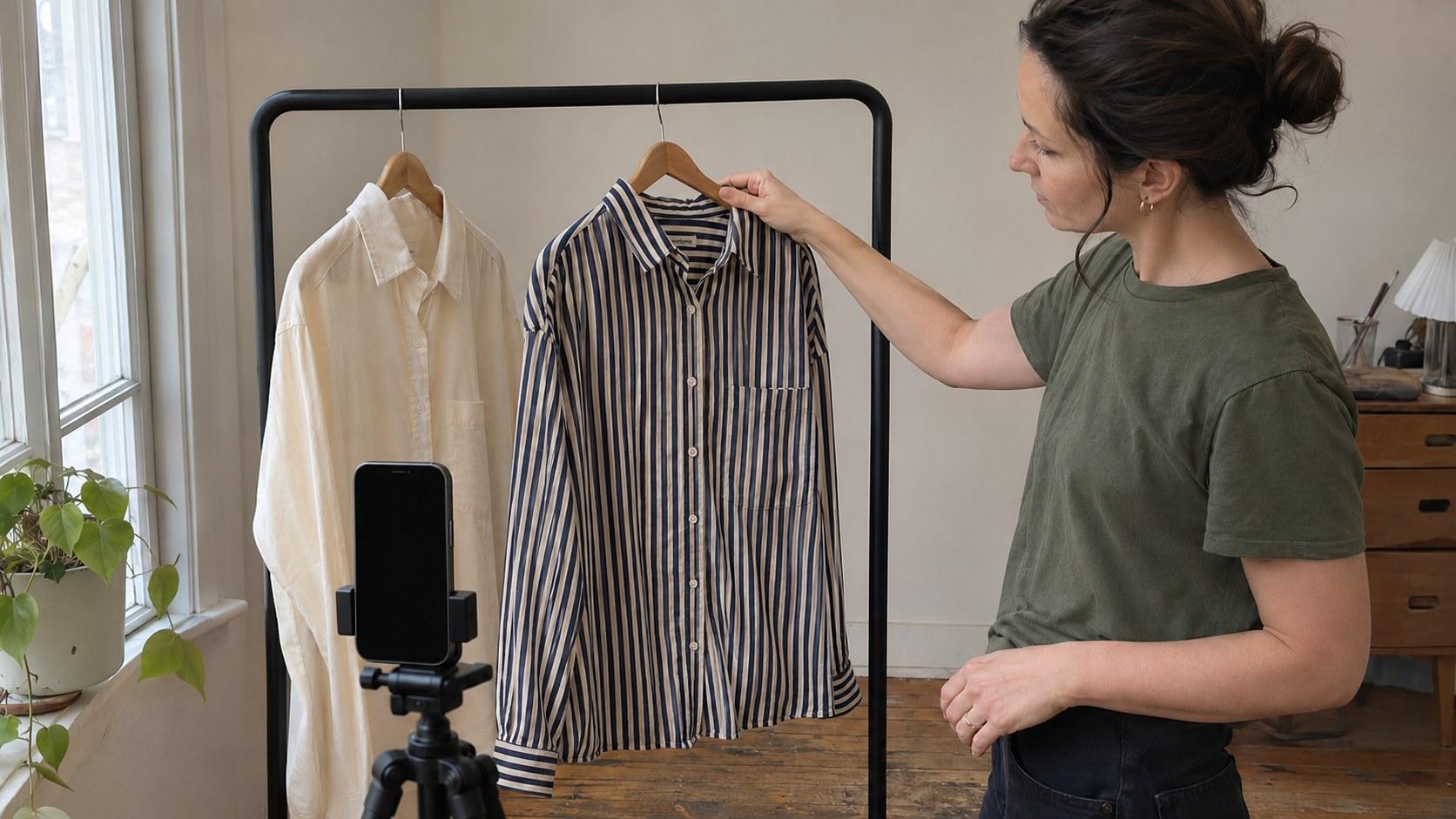
Why Striped Clothes Look Wavy in TikTok Videos—and How to Fix It
Fix wavy stripes and shimmering fabric in TikTok videos with practical camera tests, honest garment shots, and a repeatable filming workflow.

How to Build Sustainable TikTok Income Without Creator Burnout: The 2026 Pacing Framework
Learn how to balance content production, analytics, monetization, and recovery without sacrificing TikTok growth. This practical pacing framework helps creators build reliable income around a workload they can sustain.