
Key Takeaways
What you'll learn in this article
- Show the pan's shape, inside dimensions, depth, and material before asking viewers to copy your bake.
- Film the actual batter level from a useful angle; an overhead pour alone hides how full the pan is.
- Separate explaining your tested equipment from recommending a different pan you have not tested.
- Turn a recurring equipment question into one focused next post, then review understanding separately from views.
Key Takeaways
- Show the pan's shape, inside dimensions, depth, and material before asking viewers to copy your bake.
- Film the actual batter level from a useful angle; an overhead pour alone hides how full the pan is.
- Separate explaining your tested equipment from recommending a different pan you have not tested.
- Turn a recurring equipment question into one focused next post, then review understanding separately from views.
Useful TikTok baking videos show the pan before the cake reveal: identify its shape and dimensions, show the depth and material, and record the actual batter level before baking. If viewers ask whether their own pan will work, answer only as far as your recipe testing supports. A clear equipment demonstration is more useful than a confident but untested conversion.
This guide is for baking creators whose viewers want to make the recipe but cannot tell whether their equipment matches. The next post does not need another complete cake tutorial. It needs to make the pan requirement visible and explain where your tested instructions stop.
Choose the equipment question, not another recipe
Start with the questions under a recent baking post. Separate these situations:
- The original post never identified the pan.
- It named a size but omitted the shape or depth.
- It showed the correct pan, but viewers own a different one.
- It identified the pan clearly, but the batter level was impossible to see.
The first two need a correction to your existing instructions. The third may need research and a new test. The fourth is a filming problem you can solve with a better angle.
Do not treat all four as requests for a universal conversion chart. Write the next video's job in plain language: “Help a viewer recognize the pan I used” or “Show the tested result in this specific alternative.” Those promises require different evidence.
Choose a question relevant to your usual recipes and audience. A home-baking account can answer a practical equipment obstacle without pivoting into professional cake production or buying a cupboard of pans for one post.
Make the empty pan identifiable
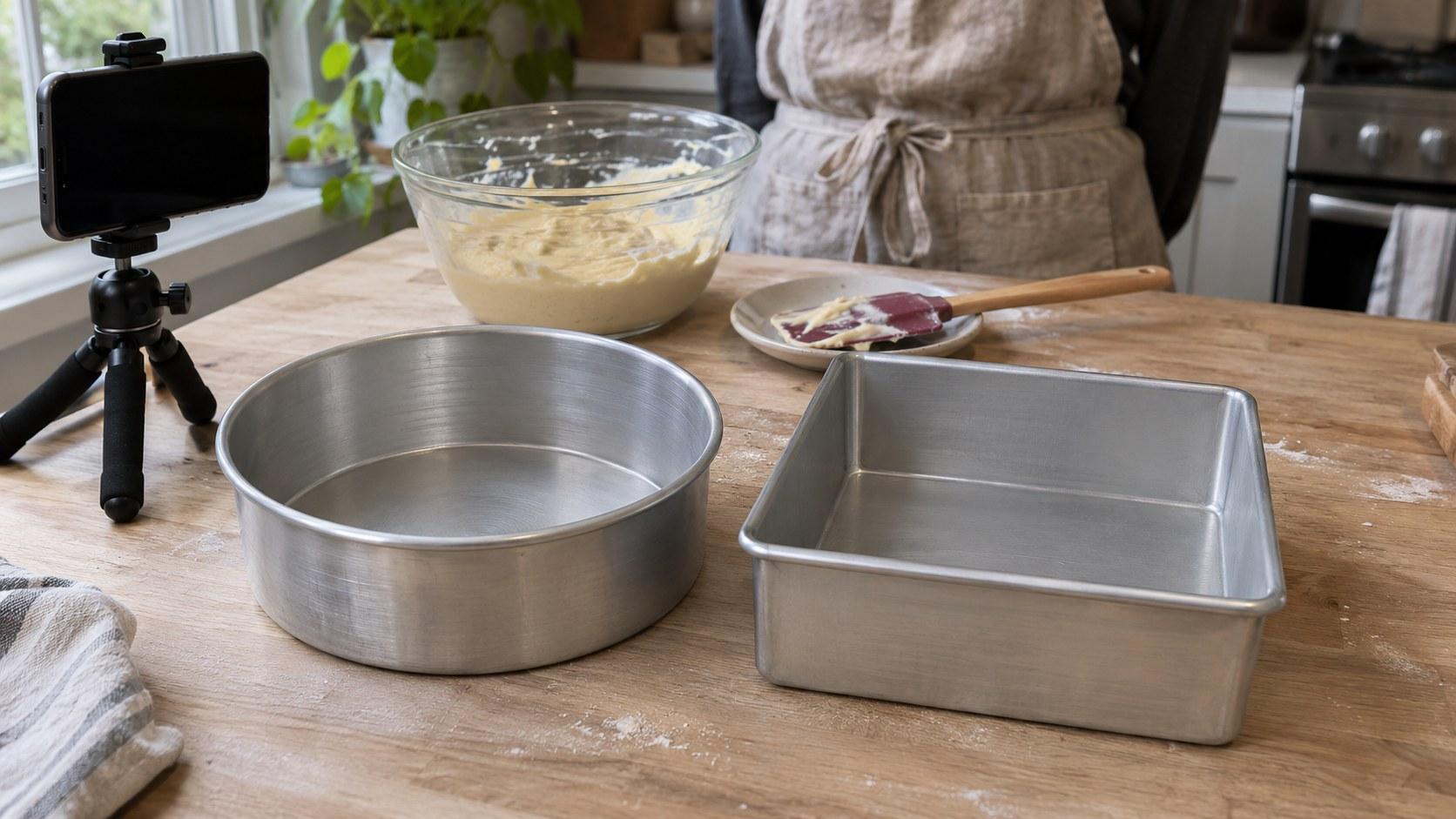
A number alone is not a complete equipment description. A square pan and a round pan with the same named size are not the same shape. A shallow and a deep pan can also look similar when filmed only from above.
King Arthur Baking's pan-size guidance explains why shape, capacity, wall height, and material matter. It also cautions that converting a recipe depends on the cake itself, not just a universal formula. That supports a modest editorial rule: show the equipment precisely before discussing substitutions.
Record the empty pan in a short sequence:
- Show its whole outline so viewers can identify the shape.
- Show the relevant inside measurement with a ruler or tape held clearly across the opening.
- Change to a side angle that makes the wall depth understandable.
- State the material and any relevant finish, rather than expecting viewers to identify them from reflections.
For a round pan, make clear that you are describing diameter. For a rectangular pan, identify both length and width. Include the depth rather than assuming it is standard. Keep units beside every dimension in your narration and edited labels.
Check the manufacturer's stated measurement convention if the product listing differs from what you measure. Do not mix an outside rim measurement with an inside base measurement and present them as equivalent. With tapered sides, explain where the measurement was taken.
Show batter depth before it disappears into the oven
A top-down shot can make a shallow layer and a nearly full pan look surprisingly alike. Add a low three-quarter view that shows the batter surface relative to the rim. Keep the pan level on a stable worktop; do not tilt it for the camera.
Record the actual filled pan used for the bake. If you remove batter after filming, the final method must describe the revised amount and the footage must not imply that the original fill was baked unchanged.
For most creamed-butter and one-bowl oil-based cakes, King Arthur's guidance recommends filling pans between half and two-thirds full to leave room for expansion. Do not turn that advice into a universal rule for every baked item. The same source identifies chiffon cakes, angel food cakes, and sponges as poor candidates for casual pan swaps because their rise and cooling requirements differ.
Your video should therefore communicate both the visible level and its context: this recipe, this pan, this tested batch. An attractive pour is optional; the final fill level is the teaching shot.
Do not confuse a pan explanation with a conversion test
Showing that two pans look similar does not establish that the recipe works identically in both. Nor does comparing their nominal capacities establish the correct baking time.
Before recommending an alternative, check whether the recipe developer already provides one. If you test a variation yourself, record the pan dimensions and material, batter quantity, oven settings, actual baking time, and the recipe's appropriate doneness checks. Keep any changes in the written version, not just a spoken aside.
Use a verdict that matches the evidence:
- “This is the pan used in the original recipe.”
- “The recipe developer lists this alternative; follow their instructions.”
- “I tested this particular alternative with these changes.”
- “I have not tested your pan, so I cannot promise the same result.”
These are example lines, not claims that a specific alternative has been tested. Avoid promising an exact time adjustment from appearance alone. Pan material and batter depth can change the bake, and a successful result in one recipe does not validate the same swap for all cakes.
Build a five-shot explanation
The strongest TikTok baking videos keep the equipment lesson connected to the finished result. Plan these shots before mixing so the essential evidence is not lost in the rush to get batter into the oven.
1. The question and the pan
Open on the empty pan with a clear promise: “Before you make this cake, here's the pan size the recipe actually uses.” Do not start with a dramatic failure unless you have genuine footage and a justified explanation of it.
2. The measurement
Show shape, dimensions, and units. Hold the frame long enough to read it on a phone. Avoid mirrored footage that reverses ruler markings or edited labels.
3. The depth and material
Use the side view to establish the wall height. Identify the material verbally or with an accurate label added during editing. A shiny surface is not a reliable substitute for naming it.
4. The filled pan
Show the actual batter level from the planned angle. If the recipe divides batter between multiple pans, say so; one visible pan should not imply it contains the entire batch.
5. The result and boundary
Show the cake produced by that setup, then state what you have and have not tested. Keep the original equipment details in the written recipe so someone returning later does not need to reconstruct them from comments.
A hypothetical next-post brief
Imagine a creator posts a simple cake and receives questions about whether the pan is round or square. This is an illustrative planning scenario, not a reported account result.
The creator's next post identifies the original square pan, shows its inside dimensions and wall depth, and includes the real pre-bake batter level. The hook addresses the confusion directly: “The number wasn't enough—I should have shown you the shape and depth.”
The creator does not promise that a viewer's round pan is interchangeable. Instead, they distinguish the original setup from an alternative that would need separate guidance or testing. That makes the follow-up useful immediately without inventing a new recipe.
Package the lesson without exaggerating it
Once the equipment answer is accurate, use the free hook generator to explore openings that name the obstacle. Reject lines that promise a perfect cake, suggest every failure comes from the pan, or imply you tested equipment you did not use.
InsightTok AI can help organize the next-post packaging through Next Post Studio: useful hooks, a niche-relevant rising sound, and an account-specific posting-time recommendation. Start with the lesson, then choose supporting creative elements. Music should not mask measurements or the limits of your advice.
The account-planning workflow helps decide how to present the post; it does not verify pan conversions or recipe reliability. Treat a recommended publishing window as a planning input, not a reach guarantee.
Review the next question, not just the view count
After publishing, compare the post with similar demonstrations over the same observation period using the analytics available to you. InsightTok AI can support that performance review, but keep a separate note about the questions viewers still ask.
If they still cannot identify the shape, repair the opening shot. If they ask where you measured, clarify the measurement view. If they now ask about a genuinely different pan, record that as a possible future test rather than assuming the explanation failed.
Fewer questions do not prove better understanding; fewer people may have watched. Saves do not establish that someone baked successfully. Use comments and direct feedback to investigate comprehension, and use performance metrics to assess audience response.
Before filming your next TikTok baking videos, check the empty-pan shot, units, wall depth, material, actual fill level, and tested limits. When the lesson is ready, create your next-post plan around an answer viewers can use.
InsightTok AI Team
Expert in TikTok growth strategies and social media analytics. Helping creators reach millions with data-driven insights and AI-powered recommendations.
Ready to Grow Your TikTok?
Get AI-powered analytics and content recommendations to boost your views and engagement.
Start Free TrialRelated Posts

The TikTok Creator Intellectual Property Audit 2026: Protect Your Likeness, Negotiate Brand Rights, and License Content
Learn how to inventory TikTok assets, review brand contracts, protect your likeness, and price content licensing. This practical 2026 audit helps creators retain ownership and build sustainable revenue.

TikTok Account Restriction Recovery: The 2026 Monetization Appeal Framework
Learn how to distinguish a TikTok restriction from a normal reach decline. Follow a practical framework for collecting evidence, appealing decisions, and protecting your account.

TikTok Likeness Protection 2026: Verify Your Identity, Find AI Deepfakes, and Protect Your Privacy
Learn how to use TikTok’s likeness-protection controls, verify your identity safely, and respond to unauthorized AI deepfakes. This guide also covers evidence collection, appeals, privacy, contracts, and long-term audience protection.