
Key Takeaways
What you'll learn in this article
- Teach viewers to locate the first incorrect row total, not simply to notice that a swatch looks narrower.
- State the stitch terminology and whether the turning chain counts before demonstrating the row boundary.
- Keep the final stitch, turn, and next starting stitch in one continuous teaching sequence.
- Separate a successful recount from a successful post: comments and analytics help choose the follow-up, but do not prove learning.
Key Takeaways
- Teach viewers to locate the first incorrect row total, not simply to notice that a swatch looks narrower.
- State the stitch terminology and whether the turning chain counts before demonstrating the row boundary.
- Keep the final stitch, turn, and next starting stitch in one continuous teaching sequence.
- Separate a successful recount from a successful post: comments and analytics help choose the follow-up, but do not prove learning.
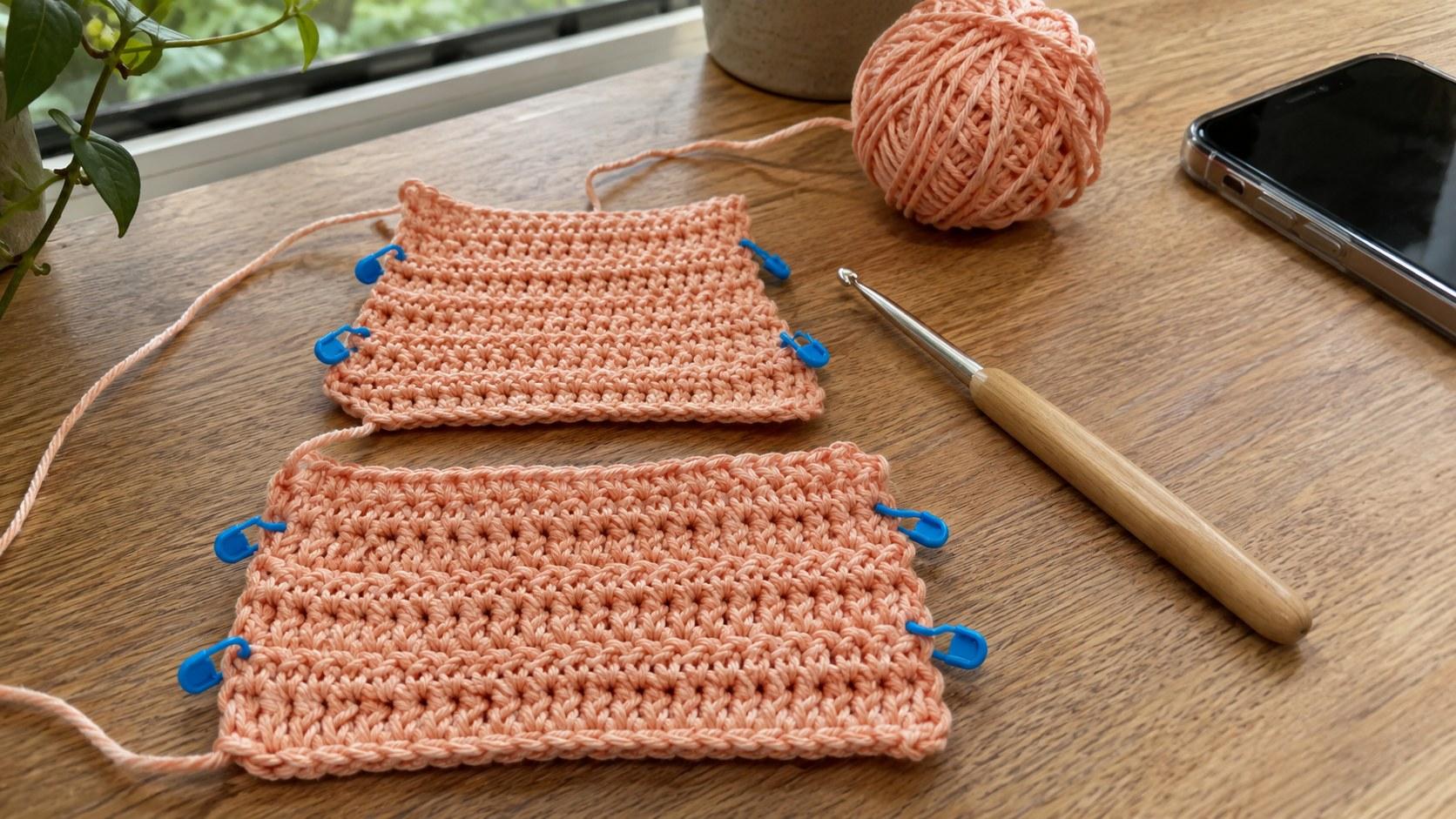
Useful crochet stitch-count tutorials show an expected row total, a visible recount, and the exact boundary where the demonstration gains or loses a stitch. For TikTok, make that one diagnostic lesson rather than another full project walkthrough. Mark the relevant edge stitches, explain the turning-chain convention for your sample, and let viewers see the count before and after the correction.
This guide is for crochet creators whose learners can form stitches but cannot keep a practice swatch consistent. It is a filming and lesson-planning workflow, not a universal pattern correction or a claim about TikTok distribution.
Start with the mismatch, not the finished shape
A shrinking swatch makes an understandable opening image. It is not, by itself, proof of a missing stitch. Tension, shaping instructions, and other construction choices can change the appearance of a piece. Begin by checking whether the actual count differs from the count the pattern requires.
Read the question behind the complaint. “Mine gets narrower” needs a different lesson from “I cannot see where your hook goes.” The first asks for a diagnosis; the second may need a better camera angle.
A public beginner crochet discussion about crooked rows illustrates how questions about lost stitches become entangled with turning-chain conventions. It is qualitative evidence of learner confusion, not a survey or a substitute for checking your pattern.
Choose a narrow promise: help the viewer establish whether one row has the expected number of stitches and find an edge mistake in your demonstrated sample. Do not promise to diagnose every uneven blanket from a single close-up.
Declare the counting rules before filming
Write a small teaching brief beside your camera:
- The stitch and whether you use US or UK terminology.
- The expected stitch count for the demonstrated row.
- Whether the turning chain counts as a stitch in this pattern.
- Whether the row includes an intentional increase or decrease.
- The exact first and last stitch locations for this example.
Follow the pattern's stated convention rather than presenting one turning-chain treatment as mandatory for every project. If the instructions are ambiguous, resolve that before teaching the correction. A confident voiceover cannot repair an uncertain count.
Use a plain practice row with no intentional shaping for your first diagnostic post. That keeps the lesson focused on accounting for stitches rather than simultaneously explaining a pattern repeat. If you teach a shaped row later, state its new expected total explicitly.
Show the relevant convention on screen as well as saying it. A concise label such as “Turning chain does not count in this sample” is more useful than a broad rule about all crochet. Keep that label clear of the active edge.
Prepare evidence the viewer can recount
Make a correct reference swatch and a separate sample containing the specific mistake you intend to demonstrate. Recount both before recording. If you deliberately created the mistake, identify it as a demonstration rather than pretending it came from a follower.
Use smooth, solid-color yarn and contrasting removable markers. Place markers according to the convention you have just established. Their job is to identify boundaries, not to replace understanding of what is being counted.
Film a clean view of the whole current row before moving closer. The viewer needs to know where the count starts and stops. A tight shot of one edge without that context can make an accurate correction seem arbitrary.
Keep a short continuity note with the footage: sample identity, row being shown, expected count, observed count, and deliberate error. This prevents a common editing problem: cutting from one swatch to another while implying they are the same piece at consecutive moments.
Do not label a diagram, marker, or decorative arrow as proof. The actual fabric should support the explanation when the overlay is hidden.
Record the row boundary without a hidden jump
The essential sequence for crochet stitch-count tutorials is not a sped-up row followed by a finished rectangle. It is the transition where a learner must decide whether to work another stitch, turn, or begin the next row.
Record these steps continuously:
- Establish the row and its expected total.
- Identify the beginning and ending boundaries, including any counted turning chain.
- Count the completed stitches visibly, pointing without covering their structure.
- Pause where the demonstrated total and expected total disagree.
- Show the specific missed or extra location in your sample.
- Demonstrate the appropriate correction, then recount.
- Show the turn and the next starting location under the same convention.
The correction depends on the actual error and pattern. Do not add a random increase just to restore a number while implying the original structure is repaired. If the example requires undoing work, show or clearly explain that step rather than hiding it behind an edit.
You can shorten routine middle stitches in the final video. Preserve the continuous boundary clip as your source evidence, and do not cut away at the instant that explains the mistake. Keep the reference swatch available for a separate comparison shot.
Make the count readable in the edit
Watch the exported draft on a phone, not only on a large editing monitor. Can you follow the pointer from one stitch to the next without losing your place? Can you distinguish the counted turning chain from an uncounted one in this specific sample?
Add numbers only after verifying the underlying sequence. Each number should correspond to the stitch being indicated, not arrive ahead of the movement. If an overlay obscures the top loops, move it outside the row and use a restrained pointer.
Narration should name the decision: “This sample includes the turning chain in the total,” or “Here is the last stitch before I turn.” Avoid vague directions such as “just go in here” when the entire lesson is about choosing the correct location.
Keep music quiet enough that the counting remains intelligible. A sound trend is optional. Do not shorten the explanation to fit a beat if doing so removes the diagnostic step.
Write a hook that matches the evidence
Package the problem you can actually demonstrate. Possible openings for a deliberately staged teaching example include:
- “Your row looks narrower. Check the count before changing your tension.”
- “This practice row is missing a stitch. Let's find where it disappeared.”
- “Before you turn, check which stitch this pattern expects you to count.”
These are proposed scripts, not quotes from real customers. Choose the one supported by your footage. The free hook generator can help explore wording, but reject versions that turn a sample-specific lesson into a universal fix.
InsightTok AI can help package the verified lesson through Next Post Studio, combining hook ideas, a niche-relevant rising sound when useful, and personalized posting-time guidance. Its next-post planning role comes after the craft check; it cannot establish that your demonstrated stitch count is correct.
Test the recount before publishing
Ask a learner with the required basic stitch knowledge to watch the draft without extra coaching. Pause before the correction and ask what count they expect, what count they see, and where they would investigate next.
Then let the video finish. Ask them to explain whether the turning chain counts in this example and identify the next starting location. Someone who repeats your final number but cannot locate the boundaries has not yet demonstrated the intended understanding.
If they lose their place during counting, adjust the pointer or pacing. If they count the wrong object, clarify the convention. If the technical correction is uncertain, get a knowledgeable crocheter to check it before publishing. These are different problems and deserve different fixes.
For crochet stitch-count tutorials, the useful test is a repeatable check, not merely a viewer saying the video looks clear.
Let the next question choose the next post
After publishing, separate lesson feedback from performance. TikTok's current Studio documentation describes account and video analytics, viewer activity times, and engagement insights including comments. Use the tools available in your interface; features can vary.
Review specific questions alongside available performance signals from comparable lessons over the same observation period. More views do not prove viewers can count the row. Fewer questions may reflect fewer viewers rather than better teaching.
Keep a small follow-up list with distinct tasks: recognizing a counted turning chain, finding the last stitch, or checking a row with intentional shaping. Choose the task your actual feedback supports instead of repeating the entire tutorial more slowly.
Use InsightTok AI to support the next hook, sound, and posting-window decision while keeping the teaching objective fixed. If you are ready to turn one verified lesson into a focused plan, plan your next post.
InsightTok AI Team
Expert in TikTok growth strategies and social media analytics. Helping creators reach millions with data-driven insights and AI-powered recommendations.
Ready to Grow Your TikTok?
Get AI-powered analytics and content recommendations to boost your views and engagement.
Start Free TrialRelated Posts

TikTok Creator Networks 2026: How to Win Recurring Brand Partnerships as a Specialist
Discover how to position yourself as a specialist creator, pitch recurring campaign programs, and become easier for brands to rehire. This guide covers analytics, pricing, payment administration, search visibility, and partnership reporting.
TikTok One Ads Strategy 2026: Monetize Videos Without Filling Your Profile With Sponsored Posts
Learn how to monetize creator-led TikTok ads without publishing every sponsored asset to your profile. This guide covers TikTok One workflows, pricing, licensing, compliance, and campaign measurement.

TikTok Creator AI Search in 2026: How to Optimize Your Profile So Brands Find You First
Discover how brands may use AI-assisted search to identify TikTok creators in 2026. Learn practical ways to optimize your profile, content, keywords, and performance proof.