
Key Takeaways
What you'll learn in this article
- A dropped-stitch lesson must show which horizontal strand comes next, not just a hook moving quickly through the fabric.
- State the fabric pattern and viewing side before demonstrating; a stockinette rescue is not a universal repair for every knitted structure.
- Preserve the same swatch and the full ladder sequence through the critical repair, even if you shorten setup footage.
- Use learner questions to choose the next lesson, and evaluate post performance separately from technical understanding.
Key Takeaways
- A dropped-stitch lesson must show which horizontal strand comes next, not just a hook moving quickly through the fabric.
- State the fabric pattern and viewing side before demonstrating; a stockinette rescue is not a universal repair for every knitted structure.
- Preserve the same swatch and the full ladder sequence through the critical repair, even if you shorten setup footage.
- Use learner questions to choose the next lesson, and evaluate post performance separately from technical understanding.
Useful knitting repair videos make the next decision visible: identify the live loop, locate the next ladder above it, and show how that strand becomes the stitch your pattern requires. For TikTok, build the post around one bounded repair rather than a dramatic before-and-after transformation. The viewer should understand why you picked that strand, not merely see that the hole disappeared.
This guide is for knitting creators planning a dropped-stitch demonstration. It is a filming and editorial workflow, not a substitute for checking the repair against your actual pattern. Its central question is simple: could a learner pause your video and identify what you will pick up next?
Choose one repair, not every knitting mistake
Start with the problem your footage can prove. A single dropped stitch in a plain practice swatch is different from a mistake involving a cable, an increase, or several adjacent dropped stitches. Do not package all of them as the same quick fix.
Write down the fabric pattern, the side facing the camera, the number of rows you will reconstruct, and the skill you expect the viewer to have already. Someone who can knit a stitch may still not recognize its structure several rows below the needle.
For a first lesson, choose a sample you can confidently repair and explain. If you teach garter stitch, the change between knit and purl structure is part of the lesson, not a complication to hide in the edit.
Cocoknits' dropped-stitch guide for garter and patterned stitches explicitly separates organizing the ladders from deciding whether the next stitch should be knit or purl. It also notes that strands can sit toward the front or behind the work, making their order difficult to read. That is a specific teaching problem worth a focused post.
Prepare a sample the camera can explain
Use a practice swatch rather than risking a valuable project while trying to record. If you deliberately create the dropped stitch, say so. A staged teaching sample is useful; pretending it is a follower's emergency is unnecessary.
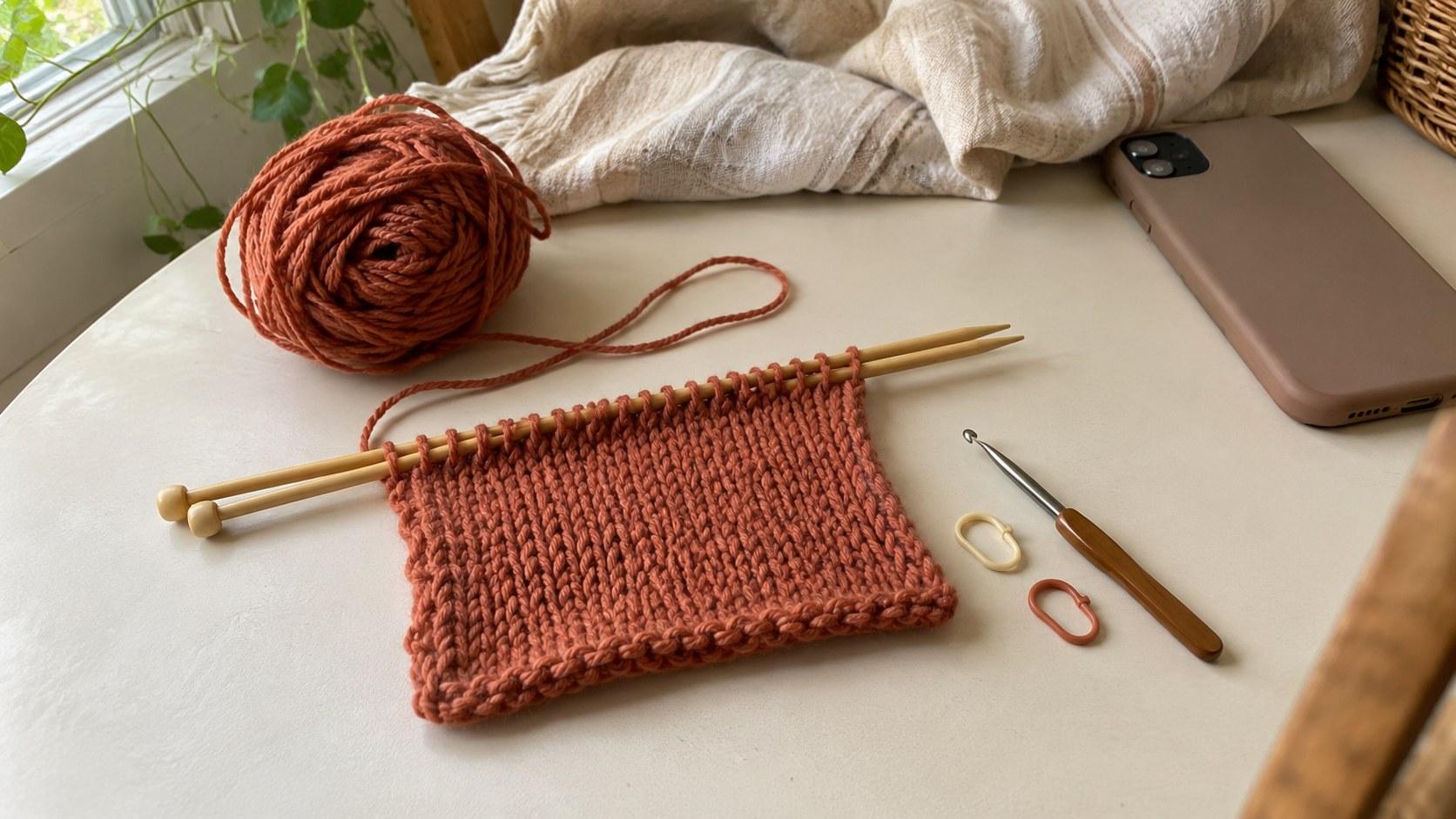
Choose smooth yarn whose individual strands remain distinct in your recorded preview. Keep enough surrounding fabric visible to establish orientation. A close-up containing only a loop and a hook removes the neighboring stitches that help explain the repair.
Before filming, make a continuity note:
- Which side of the swatch faces the camera?
- Where is the lowest live loop?
- Which horizontal strands must be worked, in what order?
- What should the restored column look like next to its neighbors?
Keep the live loop secured while arranging the shot. Record the initial state before beginning the repair, then record the finished state from the same position. Do not quietly substitute a tidier swatch for the final reveal.
Place a removable marker away from the active repair if it helps identify the viewing side. Its purpose is orientation, not decoration. Keep the hook, fingers, captions, and marker from competing for the same small area of screen.
Film a ladder map before the rescue
The most useful opening detail may be a still moment. Show the loop at the bottom and the horizontal strands above it before you start pulling anything through.
Point to the next strand without lifting several at once. Trace its position toward the surrounding fabric so viewers can understand where it belongs. If the strands overlap, gently arrange the work until their sequence is visible rather than assuming a voiceover will make an ambiguous image clear.
For knitting repair videos, this brief map does work that slow motion cannot: it explains selection. Slowing an unexplained movement only gives viewers more time to wonder which strand you chose.
Try a narration line such as: “Here is the loop we are keeping. This is the next strand above it. Before I use it, I check what this row needs.” This is a proposed script, not a quote from a customer.
Avoid describing whichever strand is nearest the lens as automatically next. Depth and row order are not the same thing, especially when the fabric brings different strands forward. Follow the structure of the sample and verify the sequence before recording.
Preserve the decision, movement, and result
Record one complete repair continuously as your master clip. You can make a shorter edit afterward, but the source footage should preserve the evidence.
- Establish the fabric pattern and camera-facing side.
- Identify the live loop and the next ladder.
- Explain whether the pattern calls for a knit or purl stitch at that point.
- Show the appropriate pickup movement without a cut hiding the passage through the loop.
- Pause on the resulting stitch before moving to the next ladder.
- Continue in the required pattern, then show the final loop returned to the needle with the appropriate orientation.
Do not turn the finishing step into “put it back however you like.” The restored loop's orientation matters. Demonstrate the mount your method requires and check it before resuming the row.
The practical editing rule is to cut repetition only after the viewer has seen the decision that makes it repeatable. If successive rows require different treatment, the change is not disposable repetition. Keep it visible or explain exactly what the edit skips.
Show the neighboring fabric at the end. A smaller opening alone is not enough evidence of a correct patterned repair; the reconstructed column should fit the surrounding structure.
Give the edit an honest promise
Open with the confusion the lesson resolves. These example hooks make different promises:
- “Not sure which ladder comes next? Check the edge before picking one up.”
- “This dropped-stitch repair changes between knit and purl. Watch the decision, not just the hook.”
- “The hole is gone—but did the repaired column stay in pattern?”
Choose only a hook supported by the actual demonstration. The free hook generator can provide wording alternatives, but a dramatic phrase should not turn one sample into a claim about every knitting mistake.
Add short labels after the repair has been checked. A number should identify the strand currently being discussed, not float over several indistinguishable strands. Keep labels away from the active loop and inspect the exported video at normal phone size.
Use music only if it supports the explanation. A beat is not a reason to remove the pause in which the viewer identifies the next strand. Spoken instruction, clear captions, and quiet handling sounds may be the better fit.
InsightTok AI can support the packaging through Next Post Studio: hook options, a niche-relevant rising sound when useful, and personalized posting-time guidance. Those planning inputs do not verify the knitting. Finish the technical check first.
Test the choice, not just the appearance
Ask a learner with the stated prerequisites to watch the draft. Pause before a pickup and ask them to point to the next strand and explain what stitch the pattern requires there. Do not answer by moving your pointer into place.
Their response helps distinguish three different revisions:
- They cannot distinguish the strands: change the view or the sample preparation.
- They see the strands but choose the wrong order: improve the ladder map.
- They choose the strand but cannot identify knit versus purl: add the missing structure explanation or narrow the lesson.
Then have an experienced knitter check the completed repair. Learner comprehension and technical correctness are separate gates; a confident explanation can still demonstrate the wrong result.
If no tester is available, pause your own exported draft at each decision and write what evidence is visible. This self-review is useful, but do not treat it as equivalent to observing someone learn from the video.
Let the remaining question choose the follow-up
After publication, sort specific questions by task rather than treating every comment as a request for a longer version. “Which strand first?” suggests a ladder-order lesson. “Why did you change direction?” suggests a knit-versus-purl explanation. “Why does mine look twisted?” suggests checking the final stitch orientation.
TikTok's official Studio guidance describes account and video analytics, viewer activity times, and engagement insights including comments. Use what is available in your interface; tools and availability can vary.
Compare your post with similar lessons over the same observation period using your available metrics. More views do not prove that viewers can perform the repair, and fewer questions can simply reflect a smaller audience. Keep a separate note about what learners could actually identify or reproduce.
For your next batch of knitting repair videos, keep the format recognizable while changing one unresolved decision. InsightTok AI can help turn that selected lesson into a hook, optional sound, and posting-window plan instead of another broad list of craft ideas.
Ready to package one useful repair? Plan your next post around the exact choice your viewer needs to see.
InsightTok AI Team
Expert in TikTok growth strategies and social media analytics. Helping creators reach millions with data-driven insights and AI-powered recommendations.
Ready to Grow Your TikTok?
Get AI-powered analytics and content recommendations to boost your views and engagement.
Start Free TrialRelated Posts

TikTok AI Content Pricing Strategy 2026: Stop Charging Less Because You Create Faster
AI may cut production time, but it should not automatically reduce your creator fee. This guide explains how to price production, posting, usage, synthetic identity rights, exclusivity, and performance income.

Build a Creator-Owned Recommendation Engine: Turn TikTok Traffic Into Recurring Revenue
Build a creator-owned recommendation engine that converts TikTok viewers into subscribers and recurring customers. Learn how to validate your idea, structure the database, price access, and avoid creator burnout.
Why Striped Clothes Look Wavy in TikTok Videos—and How to Fix It
Fix wavy stripes and shimmering fabric in TikTok videos with practical camera tests, honest garment shots, and a repeatable filming workflow.