
Key Takeaways
What you'll learn in this article
- Build a watering video around the decision to water or wait, not a schedule viewers are expected to copy.
- Show the plant, container, and growing conditions that make your demonstration meaningful.
- Film the actual moisture check before watering; a healthy-looking leaf is not a complete explanation.
- Keep important exceptions in the video, then use viewer questions to choose a focused follow-up.
Key Takeaways
- Build a watering video around the decision to water or wait, not a schedule viewers are expected to copy.
- Show the plant, container, and growing conditions that make your demonstration meaningful.
- Film the actual moisture check before watering; a healthy-looking leaf is not a complete explanation.
- Keep important exceptions in the video, then use viewer questions to choose a focused follow-up.
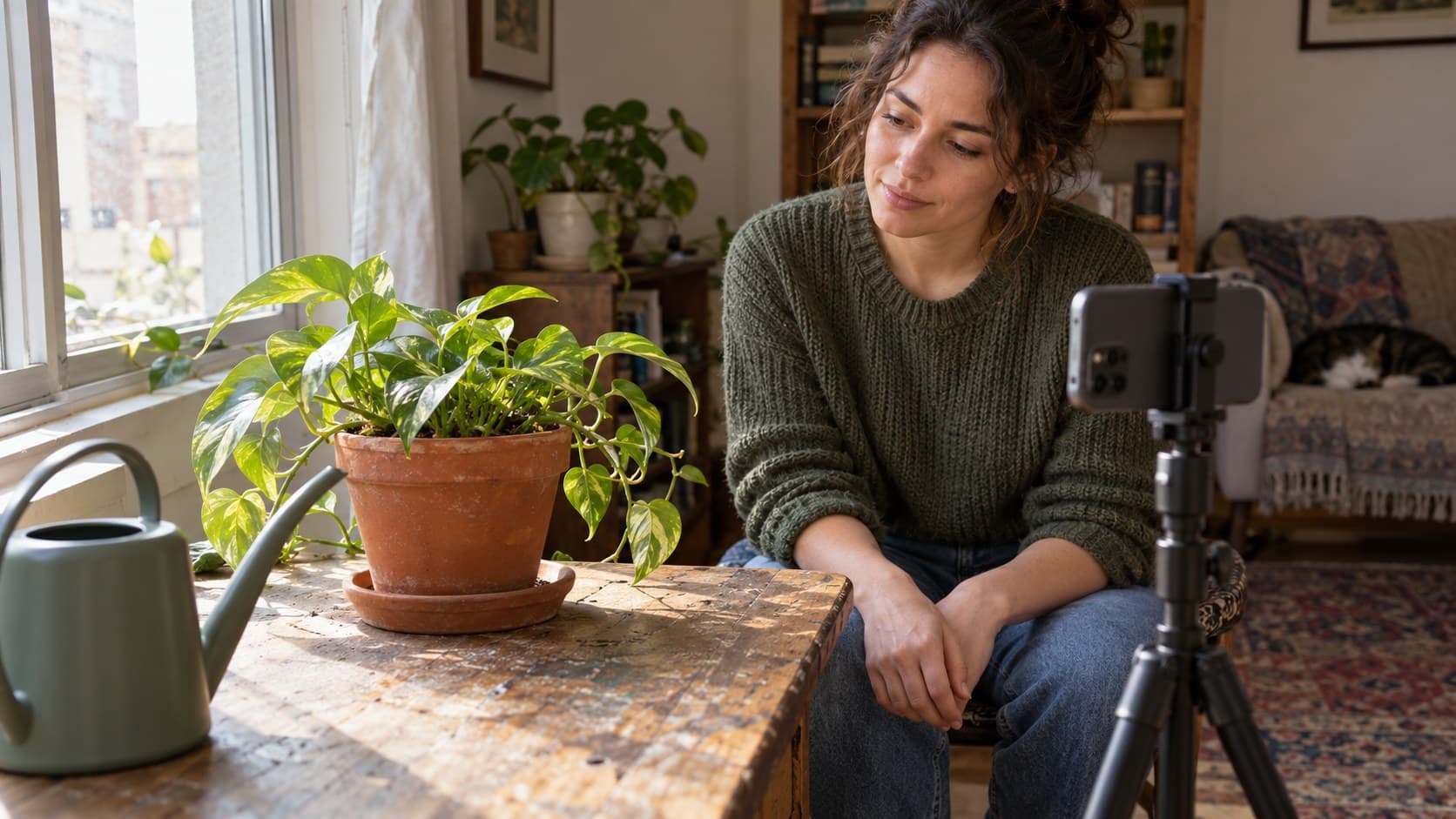
Useful plant-care TikToks show why a particular plant needs water today, not just an attractive pour. Start with the plant and its setup, demonstrate the check you actually use, explain what you found, and show the resulting decision. If the plant does not need water, waiting is a complete lesson—not a failed filming session.
This matters when viewers ask, “How often should I water mine?” Your routine may be reasonable for your home without being transferable to theirs. The creator’s job is to make that distinction visible while still giving the audience something practical to do.
Replace the calendar promise with a decision
A hook such as “Water every Sunday” is simple to film, but it leaves out the conditions behind the advice. A stronger lesson answers a narrower question: “What am I checking before I water this plant?”
The University of Maryland Extension’s watering guidance says indoor plants should be watered when they need it rather than on a fixed schedule. It identifies potting media, humidity, and temperature as factors that affect watering. It also describes checking moisture and changes in pot weight, while noting exceptions to general advice.
Use that distinction to set your video’s scope. You can schedule a reminder to inspect your plants without promising to water every plant whenever that reminder appears.
Before recording, finish this sentence: “After watching, someone with this kind of plant will know what to check before deciding whether to water.” If your answer is only “They will know my watering day,” the lesson needs a clearer decision point.
Avoid turning the correction into another absolute. “Never use a schedule” can be misunderstood as “Never set a reminder.” Explain the difference between remembering to check and watering automatically.
Capture the setup that changes the advice
You do not need a long house tour. You need enough context to stop viewers from treating one demonstration as a rule for every pot they own.
Record a brief setup shot and keep a private note with:
- The plant’s identity, as accurately as you can establish it.
- The container material and approximate size.
- Whether you are showing a nursery pot, a decorative outer pot, or both.
- The drainage arrangement and where excess water will go.
- The potting medium, if you know it.
- The plant’s normal position relative to a window or grow light.
Include the conditions relevant to your lesson in the narration or on-screen explanation. Save secondary details for the caption rather than trying to fit an entire care guide into the opening.
Be especially clear about decorative containers. If you lift an inner pot out to water it, show that transition. Otherwise, viewers may assume the visible outer container has the same drainage arrangement as the pot you actually water.
These production suggestions are a way to make your explanation easier to follow. They are not a substitute for species-specific horticultural guidance, and they do not make a short video sufficient to diagnose an unhealthy plant.
Film the actual check before the attractive pour
For plant-care TikToks, the most useful footage may happen before any water appears. Capture that footage first so the final edit has evidence behind its recommendation.
Show what you check and explain what you feel
University of Maryland Extension describes testing potting-medium moisture with a finger to about two inches as one approach for many indoor plants, with exceptions including cacti and succulents. It also describes lifting the pot to assess its weight change.
Do not compress that into “Two inches dry means water every plant.” Name the plant in your demonstration and consult appropriate care guidance before choosing the check you teach.
A camera cannot transmit moisture or weight through the screen. Pair the close-up with a plain explanation of what you actually observe. If you are comparing weight, explain that your reference is this same pot in a different moisture state—not an unrelated pot that happens to look similar.
Keep your hand from hiding the entire action. Film a wider view first, then move closer if needed. Do not repeatedly disturb the plant just to obtain a more dramatic angle.
Preserve the option to wait
If your check suggests that watering is not needed, record that conclusion. Set the watering can aside and state what you will check again rather than inventing a deadline for when the pot must be ready.
Do not add water solely because the video needs a satisfying ending. A clearly explained decision to wait can be the payoff.
If watering is appropriate for the plant shown, include the relevant finishing action rather than stopping at the pour. The Extension guidance describes allowing water to drain and emptying excess water from saucers. Show your actual drainage setup instead of leaving viewers to infer it from a decorative final shot.
Edit out repetition, not the conditions
Fast editing becomes misleading when the qualification disappears but the instruction stays. Review the sequence as if the viewer knows nothing about your home or plant collection.
Keep these three pieces connected:
- What you observed.
- What that observation means for the plant shown.
- What action you chose, including doing nothing today.
Avoid a cut that makes two different plants look like the same demonstration. If you use footage from another day, label that change accurately. Do not imply that a plant recovered immediately because a later healthy clip follows a watering shot.
Keep essential limits in the video itself. The caption can hold the source link, extra context, and species details, but it should not be the only place viewers learn that your instruction has exceptions.
Listen once without watching. Can someone understand the decision from your narration? Then watch without sound. Do the visible explanation and captions preserve the same meaning? These are clarity checks, not claims about a platform ranking requirement.
A hypothetical watering-video brief
Imagine a houseplant creator whose viewers keep asking whether they should copy the creator’s weekly routine. This is an illustrative planning scenario, not a customer result.
The creator chooses one familiar plant and films the following brief:
- Opening: “My plant reminder went off. That does not mean this pot needs water.”
- Context: Show the plant and explain the inner-pot and outer-pot arrangement.
- Evidence: Demonstrate the appropriate moisture check and describe the actual finding.
- Decision: Water or wait based on the plant’s needs and the observed condition.
- Ending: “Use a reminder to check your plant, not to copy my watering day.”
The footage determines which decision appears in the finished video. The creator does not write a watering outcome in advance and then force the plant to fit it.
A useful follow-up might explain the container setup if that is what viewers still misunderstand. It would not automatically become a broad “complete houseplant guide.” One unresolved question is enough for another focused post.
Package the lesson around your account’s audience
Once the explanation is sound, work on the opening and posting plan. Keep the educational promise intact while testing how to introduce it.
Possible opening lines include:
- “This watering reminder is a check-in, not an instruction.”
- “Before you copy my routine, look at the pot inside this planter.”
- “I came here to film watering. This plant changed the plan.”
Use the last version only if it truthfully describes the footage. The free hook generator can help explore wording, but reject suggestions that turn a conditional lesson into a universal rule.
InsightTok AI’s Next Post Studio brings together niche-relevant sound suggestions, hooks, and an account-informed posting window. Use it after you have chosen the question your footage can answer. A rising sound is optional packaging; it should not drown out the observation the viewer needs to hear. You can start with the free account scan to review your account’s available performance information.
TikTok’s official Studio documentation describes account and video analytics, viewer activity times, and engagement insights that can inform future posts. Features and access can vary, so work with the information available in your interface.
Compare this lesson with similar educational posts after a consistent observation period. Look at available performance metrics alongside the questions viewers ask. A successful-looking view count does not prove that people understood the watering decision, and a confused comment is not proof that the whole video failed.
Check the lesson before you publish
Before posting plant-care TikToks, ask:
- Is the plant and relevant setup identifiable?
- Does the footage show the check before the decision?
- Have I preserved the exceptions to any general guidance?
- Does the ending accurately show what happened today?
- Could a viewer mistake my personal routine for a universal schedule?
Fix the first point of confusion before adding more effects or a broader promise. The goal is a post that helps someone make a better-informed observation, with a clear next question for your account to answer.
When you are ready to turn that lesson into a focused posting plan, try InsightTok AI for help with the hook, sound, and timing—while keeping the plant-care judgment grounded in appropriate sources.
InsightTok AI Team
Expert in TikTok growth strategies and social media analytics. Helping creators reach millions with data-driven insights and AI-powered recommendations.
Ready to Grow Your TikTok?
Get AI-powered analytics and content recommendations to boost your views and engagement.
Start Free TrialRelated Posts
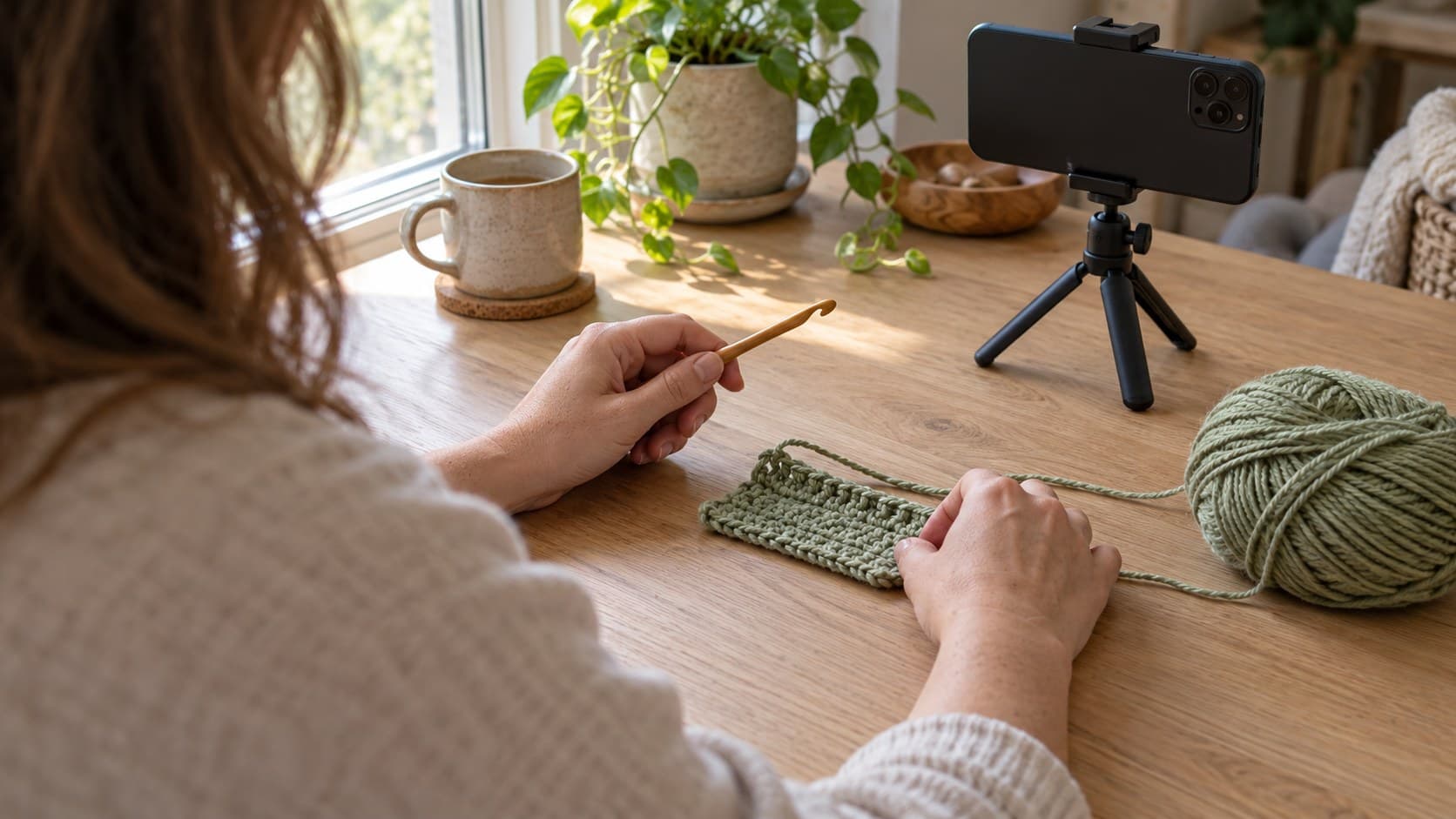
Left-Handed Crochet TikToks: Adapt a Tutorial Without Confusing Learners
A practical adaptation workflow for crochet creators: choose a suitable lesson, verify hand roles and pattern direction, rebuild text, and test the finished tutorial.
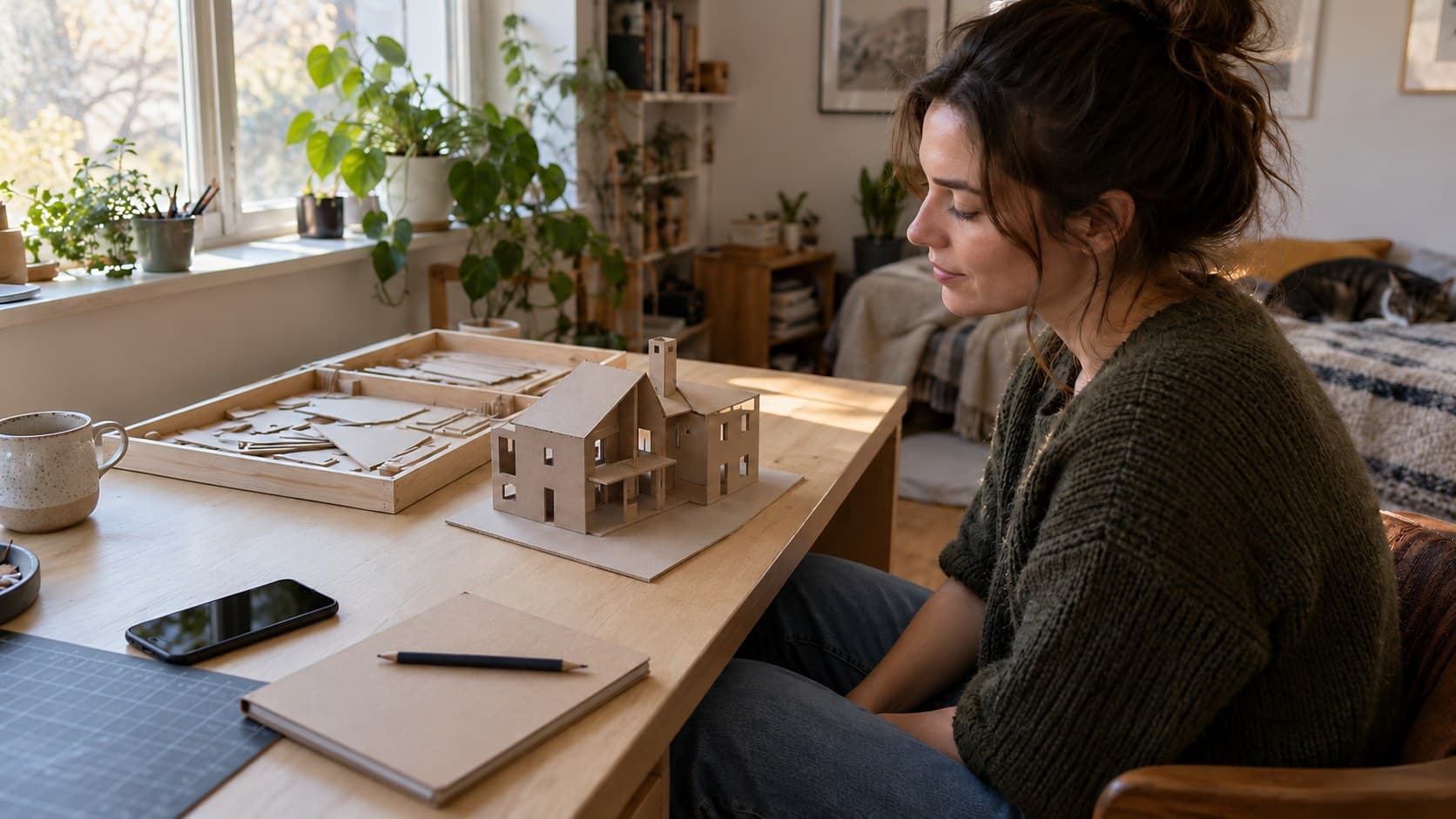
How to Plan TikTok Videos for Projects That Take Several Days
A practical filming and publishing workflow for multi-session projects: capture meaningful milestones, preserve session notes, and choose an honest standalone lesson or complete recap.
Why Your TikTok LIVE Sessions Generate 10K+ Viewers But Your Monthly Income Stays Flat: The LIVE-to-Evergreen Asset Monetization Framework
Have you ever wondered why your TikTok LIVE sessions attract thousands of viewers but your monthly income remains stagnant? Many creators face this challenge.