
Key Takeaways
What you'll learn in this article
- Show the root ball and explain the evidence before revealing a replacement pot.
- Identify the plant, distinguish the growing pot from its decorative cover, and keep the same specimen visible throughout the demonstration.
- Compare old and proposed pots side by side rather than using perspective to exaggerate their size difference.
- Make one useful lesson about the decision to repot; save long-term growth claims for a documented follow-up.
Key Takeaways
- Show the root ball and explain the evidence before revealing a replacement pot.
- Identify the plant, distinguish the growing pot from its decorative cover, and keep the same specimen visible throughout the demonstration.
- Compare old and proposed pots side by side rather than using perspective to exaggerate their size difference.
- Make one useful lesson about the decision to repot; save long-term growth claims for a documented follow-up.
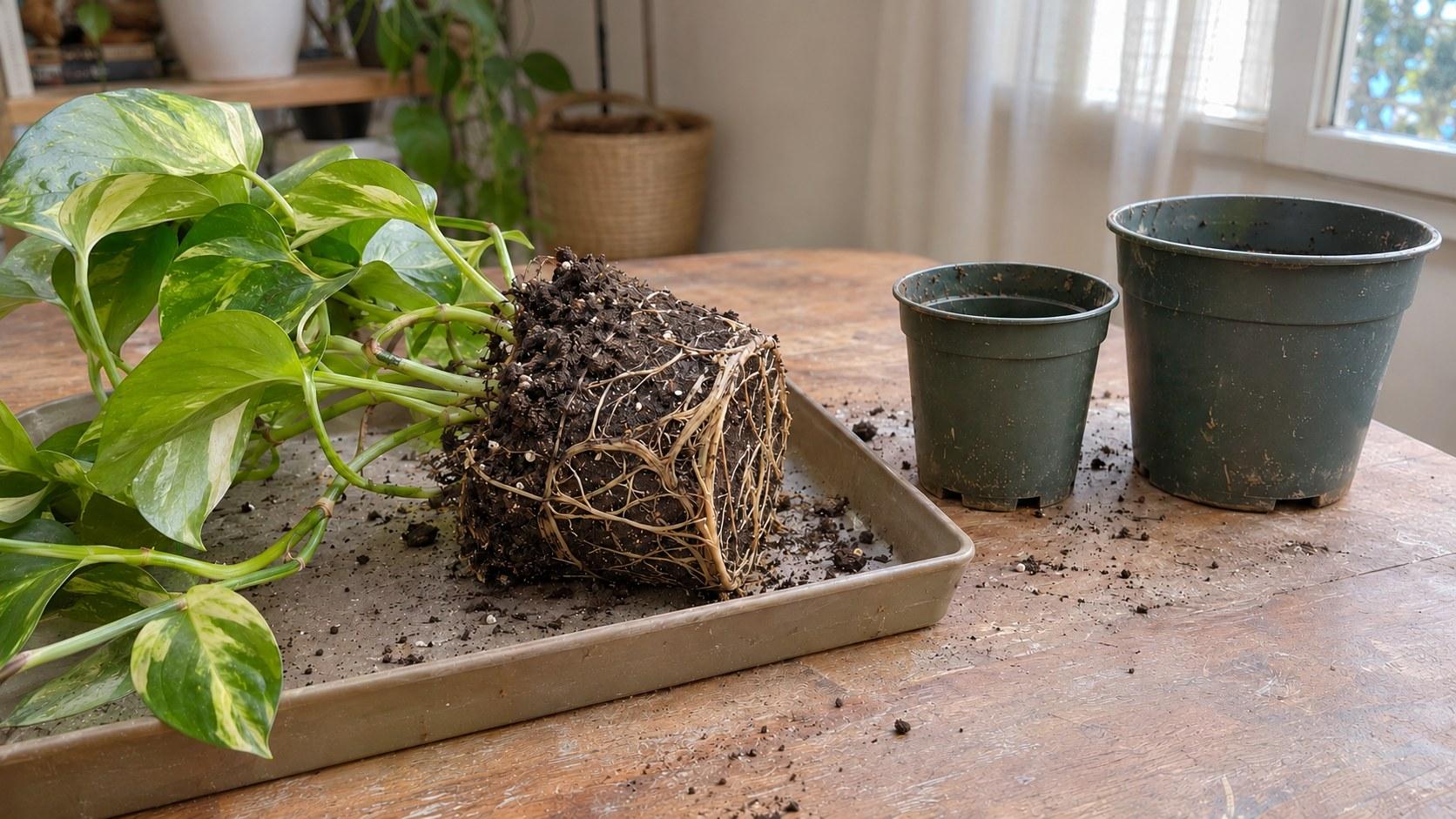
Useful repotting TikToks show why a particular plant needs a change, not just how attractive it looks in a new container. Film the plant in its existing growing pot, reveal the root ball clearly, explain the visible evidence, and compare the proposed container with the old one before proceeding. A viewer should understand the decision even if you remove the final decorative reveal.
This is a filming and content-planning guide for houseplant creators, not a universal prescription for every species. Your next post can answer one practical question: “What did you see that made you choose a different pot?” That is more specific than another fast montage of soil, roots, and fresh foliage.
Choose the question before choosing the reveal
A pot-change video can serve several different viewers. Someone buying a decorative planter needs different information from someone wondering whether a plant has outgrown its growing container. Do not combine those needs without explaining the distinction.
Choose one primary question:
- Does this plant actually need more growing room?
- What does the outside of this root ball look like?
- How does the proposed growing pot compare with the current one?
- Is this a change of growing container or only a change of decorative cover?
For this lesson, use the first question and make the root-ball inspection its evidence. Show the container that actually holds the roots and potting mix. If it sits inside a decorative outer pot, lift the inner container into view and name the difference before discussing size.
Avoid inventing urgency. “This plant needs a bigger pot immediately” is a stronger claim than your footage may support. “Here is what I checked before choosing its next pot” leaves room for a measured explanation.
Ground the plant-care claim before recording
The University of Minnesota Extension's spring houseplant guidance recommends repotting only when the plant truly needs more space. It describes roots circling inside the pot, roots pushing through drainage holes, and soil drying out quickly as signs to look for. It recommends choosing a pot one size larger and refreshing the soil.
Use that source to explain what you are checking, not to diagnose every struggling plant from one symptom. A single visible root does not tell the entire story of a plant's condition. Identify your species and consult appropriate care guidance before giving advice about timing, root treatment, or potting mix.
The cited guidance describes spring as ideal for repotting. Do not turn the date you happen to film into a universal seasonal instruction for viewers in different climates or growing conditions. Say why you are inspecting this plant now, and keep uncertainty in the explanation when it matters.
The production recommendations below are practical ways to make that reasoning visible. They are not TikTok ranking rules or promises of plant recovery.
Film the inspection as a connected sequence
For repotting TikToks, the decisive footage is often the least glamorous: the moment between removing the container and reaching for fresh mix. Prepare the camera before disturbing the plant so you do not have to repeat that moment unnecessarily.
Start wide enough to establish identity
Show the whole plant, its growing pot, and your work surface. Keep a recognizable feature in view when moving closer, such as a particular leaf or the rim of the tray. This helps viewers connect the close-up with the specimen they just saw.
Use a stable phone support and a surface that can safely catch loose mix. Keep the background simple. A collection of unrelated pots may look attractive but make it difficult to tell which container belongs to the demonstration.
Preserve the root-ball reveal
Film the removal and first inspection in one continuous take where practical, using appropriate handling for the plant. Do not pull on stems for the sake of a dramatic reveal. If removal is difficult, pause filming and deal with the plant safely rather than forcing an action to fit your shot list.
Once the root ball is accessible, show its side and underside without letting your hand cover the area you are discussing. Use soft side light so pale roots and dark mix remain distinguishable. Check the actual phone preview: bright window light behind the plant can turn the important details into a silhouette.
Describe what is visible
Point beside the feature rather than placing a finger over it. Explain whether you see roots circling the outside, how much mix remains visible, and what other observations informed your decision.
Do not infer root health solely from how dramatic the close-up looks. If you are unsure what you are seeing, say so and narrow the video's promise to documenting the inspection. A clear observation is more useful than an unsupported diagnosis delivered confidently.
Make the pot comparison honest
Set the old growing pot and proposed replacement beside each other on the same surface, at approximately the same distance from the camera. Perspective can make a modest difference look enormous when one pot is held close to the lens.
Show the openings and overall shape. If you describe measurements, measure the relevant dimensions and explain what you measured; a product's nominal size may not communicate its usable interior. Different shapes can also make two similarly labeled pots look deceptively interchangeable.
Do not use a decorative outer container as the “new pot” in one shot and a smaller inner growing pot in the next without explaining the change. Show the drainage arrangement relevant to your setup instead of letting the audience assume every visible container works the same way.
Your lesson does not need a huge upgrade to be satisfying. The payoff is that viewers can follow why this replacement was selected. If your inspection does not support upsizing, change the script rather than making the plant fit the planned transformation.
Edit for evidence, not instant recovery
Keep the observation, explanation, and container choice together. You can remove repetitive scooping or cleanup without removing the reasoning behind the action.
Watch for misleading transitions:
- A dense root ball from one plant followed by a different plant entering a new pot.
- An old and new pot filmed at different distances to imply a larger size change.
- Healthy foliage recorded weeks later placed immediately after repotting without a time label.
- A caption claiming recovery when the video only documents the initial procedure.
If you include later footage, use the actual elapsed time and identify the same specimen. A fresh reference photo and a dated note are enough to start that record. You do not need to predict a recovery deadline to make today's post complete.
Keep important qualifications in the video itself. A caption can hold sources and additional context, but it should not be the only place viewers learn that the advice applies to a particular plant and situation.
Turn the footage into a focused next-post brief
Here is a hypothetical creative brief, not a customer result:
- Viewer question: “How did you decide this plant needed a different pot?”
- Opening: “Before I choose its new pot, look at the roots inside this one.”
- Evidence: A continuous reveal followed by readable views of the root ball.
- Explanation: Name the observed signs and the limits of what they establish.
- Decision: Compare the containers on the same plane and explain the choice.
- Follow-up: Document this specimen later, or answer a specific unresolved container question.
If you have access to Creator Search Insights, use it to check how people phrase related questions rather than assuming your preferred wording is what viewers search. TikTok's introduction to Creator Search Insights describes topic discovery and content-gap filtering, initially available in selected regions. Check what is available in your own account; the announcement is not proof that every interface currently has identical features.
InsightTok AI can help turn the chosen lesson into a posting plan through Next Post Studio, with hook ideas, a niche-relevant rising sound, and a suggested posting time. Start with the evidence your footage actually contains. Do not let a suggested hook promise a rescue or transformation you have not documented.
Use the hook generator to explore concise openings, then reject any that exaggerate the plant's condition. Music is optional: narration identifying roots and containers should remain clear. The broader account-planning tools can help place this focused lesson alongside your other content without turning it into a generic plant-care list.
Run a phone-sized clarity check
Before publishing repotting TikToks, pause the draft at the root-ball reveal and the pot comparison. Can a viewer see the feature you discuss? Can they identify the original growing container? Does the explanation still make sense without the decorative ending?
Read the captions with sound off, then listen without watching. Both versions should preserve the same decision and its limits. Remove any recovery claim that the recorded timeline cannot support.
After posting, collect the questions people actually ask. Confusion about container size calls for a different follow-up than curiosity about later growth. Neither praise nor a large view count proves that the inspection was understood.
When the lesson is clear, try InsightTok AI to plan its hook, sound, and posting window while keeping the plant-care judgment grounded in appropriate sources.
InsightTok AI Team
Expert in TikTok growth strategies and social media analytics. Helping creators reach millions with data-driven insights and AI-powered recommendations.
Ready to Grow Your TikTok?
Get AI-powered analytics and content recommendations to boost your views and engagement.
Start Free TrialRelated Posts
Cookie TikToks: Film a Chilled-Dough Spread Test Viewers Can Trust
Film cookie TikToks with equal dough portions, a logged chilling interval, cool pans, and honest spread comparisons that answer a real baking question.
Piano TikTok Tutorials: Make Sustain Pedal Changes Audible
Make piano TikTok tutorials clearer with matched sustain-pedal comparisons, synchronized foot views, and audio that preserves the lesson.
Sourdough TikToks: Show Bulk Fermentation Without a Misleading Timer
A same-batch filming workflow for bread creators: show dough development, preserve real conditions, and turn fermentation questions into a useful next post.